


Can an RO membrane for home remove bacteria?
Oct 08, 2025
Leave a message
In the realm of home water purification, Reverse Osmosis (RO) membranes have emerged as a popular choice for ensuring clean and safe drinking water. As a supplier of RO Membrane for Home, I often encounter a crucial question from customers: Can an RO membrane for home remove bacteria? In this blog post, I'll delve into the science behind RO membranes, their effectiveness against bacteria, and other related aspects to provide a comprehensive answer.
Understanding Reverse Osmosis Technology
Reverse osmosis is a water purification process that uses a semi - permeable membrane to remove ions, molecules, and larger particles from water. The principle is based on the fact that when pressure is applied to the concentrated side of a semi - permeable membrane, water molecules are forced through the membrane, leaving behind contaminants.
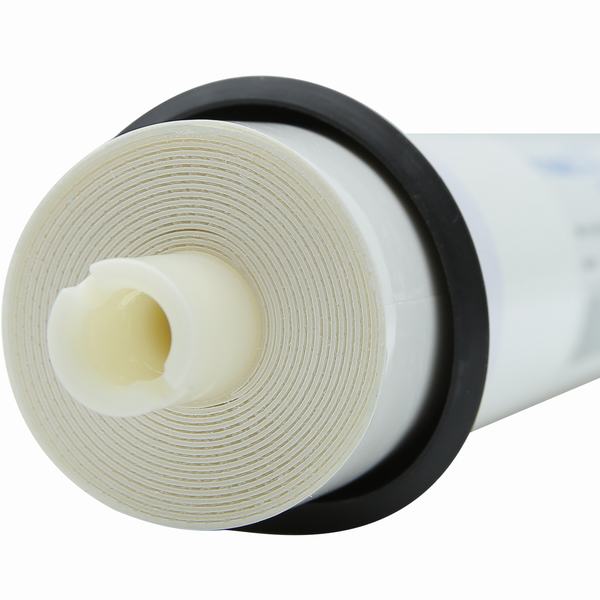

The pores of an RO membrane are extremely small, typically around 0.0001 micrometers. This is much smaller than the size of most bacteria, which generally range from 0.2 to 2 micrometers. Due to this significant difference in size, in theory, an RO membrane should be able to physically block bacteria from passing through.
The Effectiveness of RO Membranes in Removing Bacteria
Numerous scientific studies have demonstrated the high efficiency of RO membranes in removing bacteria. When an RO system is properly installed and maintained, it can achieve a bacteria removal rate of up to 99.99%. This means that the vast majority of bacteria present in the feed water will be retained on the feed side of the membrane, and the water that passes through will be virtually bacteria - free.
One of the key factors contributing to this high removal rate is the tight pore structure of the RO membrane. Bacteria are simply too large to fit through the tiny pores, so they are effectively filtered out. Additionally, the pressure-driven nature of the reverse osmosis process helps to ensure that the bacteria do not have a chance to bypass the membrane.
However, it's important to note that the performance of an RO membrane can be affected by several factors. For example, if the membrane is damaged or fouled, bacteria may be able to penetrate through the compromised areas. Fouling can occur when particles, organic matter, or scale build up on the surface of the membrane, reducing its filtration efficiency. Regular maintenance, including membrane cleaning and replacement at the recommended intervals, is essential to keep the RO system operating at its best.
Real - World Applications and Case Studies
In real - world applications, RO membranes for home use have been widely adopted to provide safe drinking water. Many households that rely on well water or water from other potentially contaminated sources have installed RO systems to protect their families from water - borne diseases caused by bacteria.
For instance, in some rural areas where the water supply may be at risk of bacterial contamination, an RO system can be a reliable solution. A family living in such an area installed a domestic RO system with a high - quality RO membrane. After using the system, water tests showed a significant reduction in the bacteria count, and the family reported improved taste and odor of the water.
Limitations and Considerations
While RO membranes are highly effective at removing bacteria, they are not a standalone solution for complete water purification. RO membranes do not remove dissolved gases, such as carbon dioxide, and they may not be able to eliminate certain chemical contaminants that are small enough to pass through the membrane.
Moreover, the initial water quality plays a crucial role. If the feed water contains a large amount of organic matter or other contaminants, it can increase the risk of membrane fouling. Pre - treatment of the water, such as using a sediment filter or an activated carbon filter, can help to reduce the load on the RO membrane and extend its lifespan.
Another consideration is that RO systems waste a certain amount of water during the purification process. The ratio of purified water to wastewater can vary depending on the system design and operating conditions. However, advancements in technology have led to the development of more water - efficient RO systems in recent years.
Our Range of RO Membranes for Home Use
As a supplier of RO Membrane for Home, we offer a wide range of high - quality membranes to meet different customer needs. Our Domestic Reverse Osmosis Membrane is designed with state - of - the - art technology to ensure maximum bacteria removal and long - term performance.
The Best Domestic RO Membrane 3012 is a popular choice among customers. It has a high flow rate and excellent rejection rate for bacteria and other contaminants. This membrane is suitable for small to medium - sized households and can provide a steady supply of clean, bacteria - free water.
Our Domestic Reverse Osmosis Membrane 2012 is another great option. It is more compact and energy - efficient, making it ideal for homes with limited space or those looking to reduce their energy consumption.
Conclusion and Call to Action
In conclusion, an RO membrane for home can indeed remove bacteria effectively when it is properly installed, maintained, and operated. It offers a reliable and convenient way to protect your family from water - borne diseases caused by bacteria. However, it's important to understand the limitations and take appropriate measures to ensure the long - term performance of the RO system.
If you're interested in learning more about our Domestic Reverse Osmosis Membrane products or have any questions about bacteria removal and water purification, please feel free to contact us. We are committed to providing you with the best solutions for your home water purification needs. Let's work together to ensure that you have access to clean, safe, and great - tasting water.
References
- "Reverse Osmosis Technology: Principles and Applications" by William E. Blount
- "Water Treatment Handbook" edited by Paul F. Strom
- Various research papers on water purification and RO membrane performance published in scientific journals such as "Journal of Membrane Science" and "Water Research"
Send Inquiry