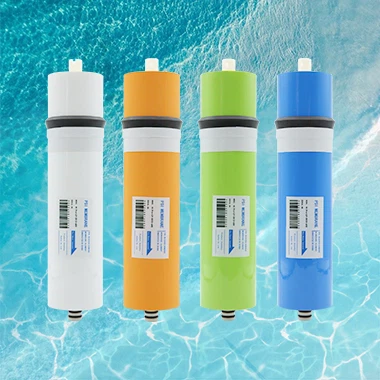
You Professional Reverse Osmosis Membranes Manufacturers


Proshare Innovation Suzhou focuses on the realization of the third generation of Nano-composite thin film type high-end reverse osmosis and nanofiltration membrane TFN R & D and production, in the past 10 years has achieved rapid development, alternative to imported membrane products, stable application in textile wastewater, garbage leachate, high salt and high COD wastewater, and related environmental protection fields.


Why Choose Us

Professional Team

We have a group technical team with years of experience in manufacturing and application of filter membranes, and are jointly committed to the development of environmentally friendly, high-efficiency, energy-saving filter membrane products.


Production Equipment

We own several high-quality membrane production lines including essential for consistency and performance Raw Material Handling, Membrane Casting, Phase Inversion, and Post-Treatment to enhance performance characteristics such as flux rate and rejection efficiency. Precision Rolling and Cutting, strict performance standards Quality Control equipment, Testing, and Packaging equipment.

Our Service

We have built a reputation for our relentless commitment to understanding our customers' membrane needs and finding ways to help them achieve their quality, productivity, and economic goals in an ever-changing environment.

Our Certificate

ROHS COMPLIANCE certificate, IS09001 quality system certificate, Environmental management system certificate, health safety management system Certificate, Utility model patent certificate, Invention patent of multi-layer RO membrane, Invention patent of membranes produce.


First 123 Last
Advantages of Reverse Osmosis Membranes

Improved removal of contaminants
Reverse osmosis membranes are highly efficient at removing a wide range of contaminants from water, including dissolved salts, heavy metals, organic compounds, and bacteria. This ensures that the water used in industrial processes is free of impurities that could affect product quality or damage equipment. Especially when using high-quality reverse osmosis membranes manufactured with the best materials and technologies.


Increased water recovery
Reverse osmosis membranes have made significant advances in water recovery rates, allowing industrial plants to maximize water use efficiency. By selectively separating clean water from the concentrated brine stream, reverse osmosis systems can recover a greater portion of the feed water, reducing total water consumption and wastewater generation.

Prevention of flaking and blemishe

Scale and impurities are common challenges in industrial water systems. RO membrane technology has evolved to include advanced anti-scale and anti-fouling features, such as enhanced membrane surface coating and pretreatment processes. These innovations help reduce membrane contamination, extend membrane life, and reduce the frequency of cleaning and maintenance procedures.

Energy efficiency

Modern reverse osmosis membrane systems are becoming more energy efficient, reducing operational costs associated with water purification in industrial plants. Innovations such as low-energy membranes, energy recovery devices, and improved system designs have contributed to significant energy savings, making reverse osmosis technology more economically viable for industrial applications.

Process integration

RO membrane technology can be seamlessly integrated into existing industrial processes. Whether they are used for raw water pretreatment, process stream concentration, or wastewater treatment. Reverse osmosis systems offer flexibility and compatibility with different plant processes. This adaptability allows manufacturers to tailor water filtration solutions to their specific needs and improve overall process efficiency.


12-Inch-Long-Reverse-Osmosis-Big-Flow-Commercial-RO-Membrane-2012-150-Gpd-Compatible-with-Commercial-RO-Systems-12-inches-


Sizes of Reverse Osmosis Membranes

In the world of reverse osmosis (RO) membranes, size matters. RO membranes come in different sizes, expressed in both diameter and length. The most commonly used standard size is the 2.5-inch diameter, available in lengths of 14, 21, 40, 80, and 120 inches. This size can accommodate a variety of flow rates up to 405 gallons per day (GPD). However, RO membranes are also available in other sizes, ranging from 50 GPD to 200 GPD, and up to 16 inches in diameter for commercial and industrial applications. The size of the RO membrane should match the size of the RO housing unit to ensure a proper fit. Additionally, it is essential to match the flow rate requirement of the application to the appropriate membrane size. Choosing the right membrane size ensures the right balance between performance, efficiency, and cost-effectiveness.


Construction of Reverse Osmosis Membranes

Most commonly used RO membranes are typically composed by a thin film composite membrane consisting of three layers: a polyester support web, a microporous polysulfone interlayer and an ultra think polyamide barrier layer on the top surface.

Thin film composite membranes are packed in a spiral wound configuration. Such element contains from one to more than 30 sheets, depending on the element diameter and element type.

In membrane systems the elements are placed in series inside of a pressure vessel.
The concentrate of the first element becomes the feed to the second element and so on. The permeate tubes are connected with interconnectors (also called coupler), and the combined total permeate exits the pressure vessel at one side of the vessel.

The membranes are wound around a perforated permeate pipe.
Two membrane sheets are glued together on three sides, only with an opening towards the permeate pipe. The feed water flows across the membrane surface from one side to the other. Due to the high pressure in the vessel, a part of the water penetrates the membrane and this permeate water can only leave the PV through the permeate pipe, while the rest of the water - now more concentrated - leaves on the other side of the membrane , just flowing across the sheet.

PROSHA~3


Domestic Reverse Osmosis Membrane


Material of Reverse Osmosis Membranes

Reverse osmosis RO membrane differs by the material of the membrane polymer and by structure and configuration. Based on its structure, RO membrane can be divided into two groups: conventional thin-film composite and thin-film nanocomposite. Based on the thin-film material, conventional reverse osmosis RO membrane at present is classified into two main groups: polyamide and cellulose acetate. Depending on the configuration of the membrane within the actual membrane elements (modules), the reverse osmosis membrane materials is divided into three main groups: spiral-wound, hollow-fiber, and flat-sheet (plate-and-frame).


Application of Reverse Osmosis Membrane

Reverse osmosis membrane is widely used in many fields, including:


Desalination

Remove salt from seawater to produce drinkable fresh water.


Wastewater treatment

Remove pollutants from industrial wastewater and realize water resource recycling.


Home water purification

Provide high-quality drinking water and remove impurities and pollutants from tap water.


FAQ


Q: Who makes reverse osmosis membranes?

A: Proshare Innovation Suzhou focuses on the realization of the third generation of Nano-composite thin film type high-end reverse osmosis and nanofiltration membrane TFN R & D and production, in the past 10 years has achieved rapid development, alternative to imported membrane products.

Q: What is the reverse osmosis membrane?

A: A reverse osmosis membrane is a semi-permeable membrane that allows the passage of water molecules but not most of the dissolved salts, organics, bacteria, and pyrogens. However, the water must be “pushed” through the RO membrane by applying pressure greater than the naturally occurring osmotic pressure.

Q: What are the advantages of reverse osmosis?

A: Advantages. RO reduces sodium and other minerals from hard water. It also removes toxin such as lead, mercury, Fluoride, Arsenic, Chlorine which may impart bad effect to health of the human being2,3,7 All these minerals has negative effects in one or the other way.

Q: What is the purpose of the membrane in reverse osmosis?

A: RO membranes are essential in removing bacteria, viruses, and other microbial pollutants from your water. RO membranes have a semipermeable membrane that filters out harmful bacteria, viruses, and miniscule microbes.

Q: What is the principle of the RO membrane?

A: Reverse Osmosis (RO) works by reversing the principle of osmosis, the natural tendency of water with dissolved salts to flow through a membrane from lower to higher salt concentration. This process is found throughout nature. Plants use it to absorb water and nutrients from the soil.

Q: What do reverse osmosis membranes remove?

A: Reverse osmosis effectively rejects dissolved inorganic salts, minerals, and metals from water through size exclusion. Monovalent ions like sodium, potassium, and chloride—as well as small divalent ions such as calcium, magnesium, fluoride, and sulfate—are readily removed by RO with high rejection rates of 95-99%.

Q: How often should I change my reverse osmosis membrane?

A: Most RO filters contain five different filters, four of which need to be exchanged every 6-12 months. Even if you barely use your filtration system, you should still change the RO membrane every 24 months!

As one of the most professional reverse osmosis membranes manufacturers and suppliers in China, we're featured by quality products and good service. Please rest assured to buy customized reverse osmosis membranes from our factory.

Send Inquiry