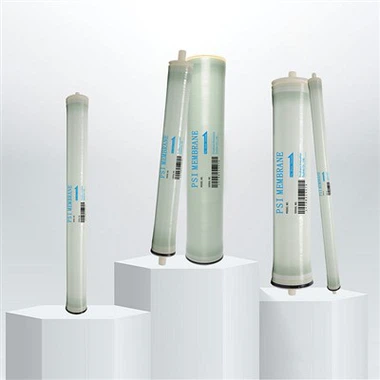
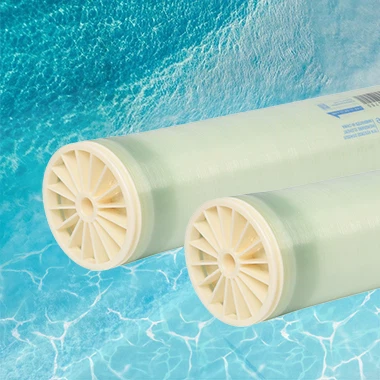
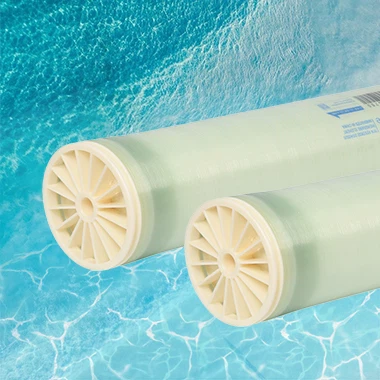
You Professional NF Membrane Element Manufacturers


Proshare Innovation Suzhou focuses on the realization of the third generation of Nano-composite thin film type high-end reverse osmosis and nanofiltration membrane TFN R & D and production, in the past 10 years has achieved rapid development, alternative to imported membrane products, stable application in textile wastewater, garbage leachate, high salt and high COD wastewater, and related environmental protection fields.


Why Choose Us

Professional Team

We have a group technical team with years of experience in manufacturing and application of filter membranes, and are jointly committed to the development of environmentally friendly, high-efficiency, energy-saving filter membrane products.


Production Equipment

We own several high-quality membrane production lines including essential for consistency and performance Raw Material Handling, Membrane Casting, Phase Inversion, and Post-Treatment to enhance performance characteristics such as flux rate and rejection efficiency. Precision Rolling and Cutting, strict performance standards Quality Control equipment, Testing, and Packaging equipment.

Our Service

We have built a reputation for our relentless commitment to understanding our customers' membrane needs and finding ways to help them achieve their quality, productivity, and economic goals in an ever-changing environment.

Our Certificate

ROHS COMPLIANCE certificate, IS09001 quality system certificate, Environmental management system certificate, health safety management system Certificate, Utility model patent certificate, Invention patent of multi-layer RO membrane, Invention patent of membranes produce.


NF98 Series Multilayer Composite Membrane


Advantages of NF Membrane Element

One of the key benefits of high-precision NF membranes element is their ability to effectively remove dissolved salts, metals, and other contaminants from water. Unlike traditional filtration methods, which can leave behind residual contaminants, NF membranes are able to remove these substances down to extremely low levels, making the purified water safe for human consumption and other uses.

Another advantage of NF membranes element is their high selectivity. This means that they can be designed to target specific contaminants, such as heavy metals or pharmaceuticals, while leaving desirable components, such as minerals, in the water. This makes them an ideal choice for purifying water for specific applications, such as pharmaceutical manufacturing or food and beverage processing.

The high-precision nature of NF membranes element is also reflected in their ability to precisely control the size of the pores in the membrane. This allows for precise control over the types of substances that can pass through the membrane and be purified. By adjusting the size of the pores, manufacturers can design NF membranes that are optimized for different applications, such as removing specific contaminants or preserving desirable components in the water.


Specification of NF Membrane Element


Supporting Net

Polyester

Interlayer

Microporous polyether sulfone

Top Surface Blocking Layer

Ultra-thin polyamide

Typical Operating Pressure

3.5-30 bar

Retained Molecular Weight

Approximately 200-800 daltons

Nanofiltration Membrane Material:

Polyamide, Sulfonated polyether sulfone, Sulfonated polyethersulfone.

Recommended Operating Pressure:

40-200 psi (3.0-14.0 bar)

Maximum Operating Pressure

600 psi (41 bar)

Operating Temperature Range:

35-131 °F (2-45 °C)

Continuous Operating pH Range (25 °C):

2.0-11.0

Online Cleaning pH Range (25 °C):

1.0-12.0

Maximum Feed Flow Rate

86 GPM (F), 118 GPM (G), 137 GPM (H), 155 GPM (I)

Maximum Pressure Drop

13 psi (0.9 bar)

Maximum Feed SDI (15 minutes):

5

Inlet Residual Chlorine Concentration:

< 0.1 ppm


Application of NF Membrane Element

 
The application of nanofiltration membrane in soft water treatment.

Because the two ions are effectively intercepted and low pressure can be operated at high water prices, the bitterness is desalinated, which absorbs a regenerative market for sodium applications. Its main advantage is that it is free of microorganisms and does not require regeneration. , Permeates water and organic matter, simple, does not take up space, etc. Moreover, it is relatively close to the method in terms of investment and price, so there is a suitable and traditional organic operation in this field.

The application of nanofiltration membrane in drinking water purification.

Due to the residue of water pollution, the quality experiment of the substances concerned has proved that nanofiltration membranes can remove the slightly toxic by-products, residual herbicides, pesticides, natural organic matter, natural organic matter, water quality, and sulfide produced in the disinfection process. Salt and nitrate, etc. It also has the advantages of good water quality, stability, low dosage of chemicals, small convenience, energy-saving, management and maintenance, and basically zero discharge. Therefore, nanofiltration membranes may become the preferred technology for clean purification in the 21st century.

The application of nanofiltration membrane on the salt in the porous surface.

In the development of salt concentration in groundwater, in areas dominated by agriculture, the water quality index is far and near, and reverse osmosis technology can be used to mine salt and other substances. But because the water recovery rate is relatively high. At the same time, the treatment of condensate is also a problem. Generally, an ion-exchange method is required to treat wastewater.

The application of nanofiltration membrane in leaf treatment.

Because the residue contains a large amount of cotton, which can penetrate and absorb each other, the black wood and the agitated wood produced in the process of absorbing black wood and wood pulp are absorbed by the element and absorption method because many organic matters in peat are negatively charged and are easily positively charged. The nanofiltration membrane is destroyed instead of causing serious pollution. For example, nanofiltration membranes are used to decolor the waste liquid produced in the alkali extraction stage of wood pulping, the ribbon membrane, biomembrane and soil lignin in the waste liquid can be intercepted, and the monovalent ion ions that do not need to be intercepted can be re-excited through the membrane, The decolorization rate of the film reaches 98%.

The application of nanofiltration membranes in advanced sewage treatment.

Membrane filtration treatment is also an important way to realize the recycling of sewage. Its main processes include flocculation sedimentation, disinfection, and other treatment processes. The process after membrane treatment also includes membrane treatment. Both can use treated water.


Installation of NF Membrane Element
NF98 Series Multilayer Composite Membrane
28
Nanofiltration Membrane Element
14

》To record the relative position of each pressure vessel and membrane element, a schematic diagram for identifying the installation position of the pressure vessel and the membrane element should be prepared. When loading and unloading the elements, please fill in the serial number of the membrane element (showed on the membrane element label) on the schematic diagram as the element number; the schematic diagram indicating the location of the pressure vessel and the membrane element will help to track the running situation track of each individual element in the system.


》The following equipments are recommended: safety shoes, rubber gloves, silicone lubricant, glycerin, safety glasses, alien wrench, pipe tong, shears, clean rags, a swab large enough to fill the inside diameter of the pressure vessel, etc.


》Check the upstream water inlet pipeline carefully, and remove all dust, grease, metal debris, etc. that may exist in the pipeline; if necessary, chemically clean the inlet pipeline and pressure vessel to ensure that all foreign objects are effectively removed.


》Check the inlet water quality carefully; before the membrane element is installed, flush the membrane system with the produced water of an effective pretreatment system for about 30 minutes, and check whether the inlet water quality of the membrane system meets the regulations and check whether there is any leakage in the pipeline.


》Remove all end cap assemblies and thrust rings from all pressure vessels, spray clean water through the open pressure vessels to remove any dust or debris present in the vessels. Soak the swab in a glycerin/water solution and move it back and forth through the pressure vessel until the vessel is clean and lubricated.


》Before installing the elements, ensure that all parts and chemicals for the installation and commissioning of the system are complete, and the pretreatment system operates normally and effectively; otherwise, do not open the membrane elements packaging bag until all thabove items are confirmed.


Materials of NF Membrane

Polymeric membranes

Polymeric membranes, particularly those made from polyamide, polysulfone, and polyethersulfone, are the most common materials used in nanofiltration. These membranes are celebrated for their selective permeability, allowing them to efficiently separate particles based on size and charge.

Each polymer brings its unique set of properties to the table, allowing for a tailored approach to nanofiltration based on the specific requirements of the application. The choice of polymer can significantly influence the performance, lifespan, and cost of the NF membrane system.

Composite membranes

Composite membranes are engineered to combine the beneficial properties of different materials to enhance performance. Typically, these membranes consist of a support layer and a selective layer, each serving distinct functions.

The support layer, often made of polysulfone or polyethersulfone, provides the structural backbone of the membrane. It is designed to withstand the operational pressures and to support the selective layer without compromising the integrity of the membrane.

4
_20240626101124

Inorganic membranes

Inorganic membranes, particularly those made from ceramic materials like alumina, zirconia, and titania, are gaining traction in the nanofiltration space. These membranes are known for their exceptional durability and resistance to harsh chemical environments.

The choice of inorganic material in membrane manufacturing is driven by the specific needs of the application, such as the type of feed water, the required purity level, and the operational conditions. Inorganic membranes, while often more expensive than their polymeric counterparts, offer unmatched performance in demanding environments.

Hybrid membranes

Hybrid membranes represent the cutting-edge in nanofiltration technology, combining the strengths of both polymeric and inorganic materials. These membranes are designed to leverage the best properties of their composite components to achieve superior performance.

Hybrid membranes also tend to have lower fouling rates compared to traditional polymeric membranes, extending their lifespan and reducing maintenance costs. The integration of different materials allows for the optimization of pore structure and surface properties, enhancing the membrane's performance in various operational conditio.


FAQ


Q: What are the materials used in NF membrane?

A: NF membranes are usually made of polyamide based Thin Film Composites (TFC), which are relatively close to RO membranes in chemical structure.

Q: What is the difference between NF membrane and RO membrane?

A: NF removes harmful contaminates, such as pesticide compounds and organic macromolecules, while retaining minerals that RO would otherwise remove. Nanofiltration membranes are capable of removing larger divalent ions such as calcium sulfate, while allowing smaller monovalent ions such as sodium chloride to pass through.

Q: What is the pore size of the NF membrane?

A: A nanofiltration (NF) membrane is classified as a pressure-driven membrane process, falling between a reverse osmosis (RO) and ultrafiltration (UF) membrane. It has pore size in the range of 0.2–2 nm with molecular weight cut-off (MWCO) from 200 to 1000 Da.

Q: What is the operating pressure of nanofiltration?

A: Nanofiltration membrane is a pressure-driven membrane, with a nominal molecular weight cutoff (molecular weight of solute that is 90 % rejected by the membrane) ranging from 200 to 1000 Da, pore size of around 0.2–2.0 nm, and operating pressures of 70–200 psi (5–15 bar).

Q: How does an NF filter work?

A: Very simply stated, in crossflow a pressurized flow of feedwater forces lower-concentration water through the NF membrane, while the now-isolated flow of higher-concentration water moves across the surface of the membrane, carrying away the rejected salts and other impurities.

Q: What is the recovery rate of nanofiltration?

A: Nanofiltration is operated at a lower pressure of about 8-10 bars, thus consuming less energy than Reverse Osmosis and achieves higher recovery rates of up to 90%.

As one of the most professional nf membrane element manufacturers and suppliers in China, we're featured by quality products and good service. Please rest assured to buy customized nf membrane element from our factory.

Water Purifier, NF98 Series Multilayer Composite Membrane, nanofiltration membranes

Send Inquiry