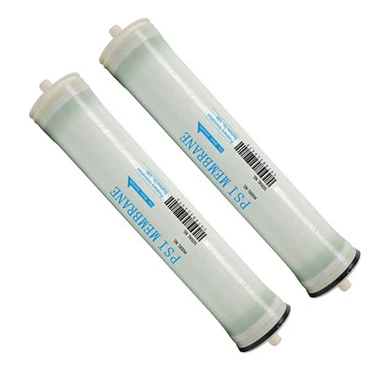
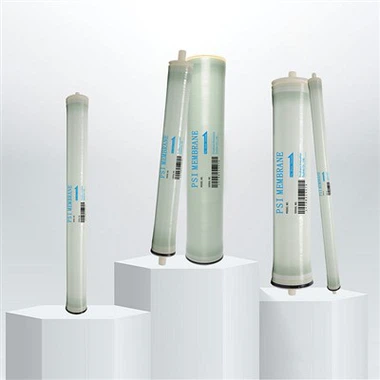
You Professional Nanofiltration Membranes Manufacturers


Proshare Innovation Suzhou focuses on the realization of the third generation of Nano-composite thin film type high-end reverse osmosis and nanofiltration membrane TFN R & D and production, in the past 10 years has achieved rapid development, alternative to imported membrane products, stable application in textile wastewater, garbage leachate, high salt and high COD wastewater, and related environmental protection fields.


Why Choose Us

Professional Team

We have a group technical team with years of experience in manufacturing and application of filter membranes, and are jointly committed to the development of environmentally friendly, high-efficiency, energy-saving filter membrane products.


Production Equipment

We own several high-quality membrane production lines including essential for consistency and performance Raw Material Handling, Membrane Casting, Phase Inversion, and Post-Treatment to enhance performance characteristics such as flux rate and rejection efficiency. Precision Rolling and Cutting, strict performance standards Quality Control equipment, Testing, and Packaging equipment.

Our Service

We have built a reputation for our relentless commitment to understanding our customers' membrane needs and finding ways to help them achieve their quality, productivity, and economic goals in an ever-changing environment.

Our Certificate

ROHS COMPLIANCE certificate, IS09001 quality system certificate, Environmental management system certificate, health safety management system Certificate, Utility model patent certificate, Invention patent of multi-layer RO membrane, Invention patent of membranes produce.


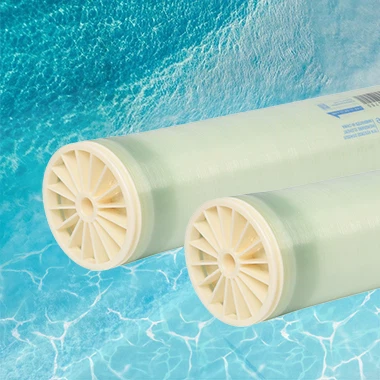
Nanofiltration Membrane Element


Advantages of Nanofiltration Membranes

Nanofiltration membranes have high selectivity towards small solutes and lower energy consumption, making them suitable for the separation of caustic soda from industrial effluents .
Nanofiltration membranes have been successfully implemented in various industries, including textile, pulp and paper, pharmaceutical, and agro-industrial, for the treatment of wastewater .
The use of nanofiltration membranes allows for the recovery and reuse of caustic soda, reducing the need for fresh chemicals and minimizing environmental impact.


Applications of Nanofiltration Membranes
 

Water and Wastewater Treatment
This is one of the main areas of focus regarding NF membranes. In the water treatment industry, NF membranes are used for water softening as they can effectively remove bicarbonate, magnesium, and calcium ions from hard water. Hard water is undesirable since these ions cause scaling in pipes and subsequent equipment.


Food and Beverage
NF membranes provide several uses in the food and beverage industry, from purifying dairy products and juices to concentrating syrups. They also decolonize and demineralize sugar solutions and colored brine separation.


Oil and Gas Industry
NF membranes have the ability to remove carbon dioxide from gases in the oil and gas industry. This is important because carbon dioxide converts into carbon monoxide at high temperatures and damages the catalyst. It's also used in wastewater treatment of aqueous effluent solution containing significant amounts of oil and other toxic chemicals.


Pharmaceutical and Biotech
NF membranes sterilize and concentrate antibiotics and separate clotting compounds from blood and plasma.


Textile, Dyes, and Leather
The textile industry uses dyes of all kinds, and NF membranes play an essential role in dye desalting and concentration. NF membranes fabricated with polyether sulfone and polyethylene glycol are used for better dye rejection and membrane performance. In the leather industry, NF membranes reject tannins.


Desalination
Additionally, NF is being tested for desalination pretreatment applications where a large part of the feed solution is treated before it reaches subsequent stages, like RO membranes. NF membranes offer high natural organic matter (NOM) removal from the seawater feed solution. Permeate solutions reduce the amount of pressure required in later stages and the rate of fouling in downstream equipment.


Types and Material of Nanofiltration Membrane

NF membranes can be made from a variety of materials, including polymers, ceramics, and metals. we will discuss the different types of NF membranes based on their material composition and fabrication method.

Polymer-based NF membranes

Polymer-based NF membranes are the most commonly used type of NF membrane due to their cost-effectiveness, flexibility, and ease of fabrication. Polymeric NF membranes can be made from a variety of materials, including polyamide, polysulfone, polyethersulfone, polyvinylidene fluoride, and cellulose acetate. These membranes are usually fabricated by phase inversion or interfacial polymerization methods, which involve the formation of a polymer film on a porous support layer. The performance of polymer-based NF membranes can be enhanced by modifying their surface chemistry or introducing functional groups to improve their selectivity and fouling resistance.

Ceramic-based NF membranes

Ceramic-based NF membranes are made from inorganic materials such as alumina, titania, zirconia, or silica. These membranes have excellent mechanical strength, thermal stability, and chemical resistance, making them suitable for high-temperature and harsh chemical environments. Ceramic NF membranes are usually fabricated by sol-gel, phase inversion, or electrospinning methods. The main disadvantage of ceramic-based NF membranes is their high cost and limited flexibility, which restricts their use to specific applications.

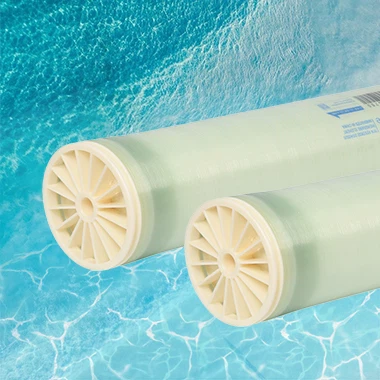
Loose Nanofiltration Membrane Element
_20240626101256

Carbon-based NF membranes

Carbon-based NF membranes are a relatively new type of membrane that is attracting attention due to their unique properties, such as high permeability, selectivity, and stability. Carbon NF membranes can be made from a variety of carbon-based materials, including carbon nanotubes, graphene oxide, and activated carbon. These membranes are usually fabricated by filtration or dip-coating methods, which involve the deposition of a carbon layer on a porous support layer. Carbon-based NF membranes have potential applications in water treatment, gas separation, and energy storage.

Metal-based NF membranes

Metal-based NF membranes are made from metals such as stainless steel, nickel, or copper. These membranes have high mechanical strength, chemical resistance, and thermal stability, making them suitable for high-pressure and high-temperature applications. Metal NF membranes are usually fabricated by electroforming or vapor deposition methods, which involve the deposition of a metal layer on a porous support layer. Metal-based NF membranes have potential applications in the petrochemical and pharmaceutical industries.


Specification of Nanofiltration Membranes


Product Specifications

Model

Feed spacer thickness

in. (mm)

Active area

ft² (m²)

TNF 3838N1

0.031 (0.79)

75 (7.0)

TNF 3838N2

0.046 (1.17)

63 (5.9)

TNF 3840N1

0.031 (0.79)

75 (7.0)

TNF 7838N1

0.031 (0.79)

365 (33.9)

TNF 7838N2

0.046 (1.17)

276 (25.6)

TNF 8038N1

0.031 (0.79)

375 (34.8)

TNF 8038N2

0.046 (1.17)

310 (28.8)

TMNF 8040PS

0.031 (0.79)

375 (34.8)


Standard dimensions in. (mm)

Size

A Diameter

B Length

C Permeate tube ID

3838

3.8 (97)

38 (965)

0.83 (21.1)

3840

3.8 (97)

38.75 (984)

0.83 (21.1)

7838

7.7 (196)

38 (965)

1.125 (28.6)

8038

7.9 (201)

38 (965)

1.125 (28.6)

8040

7.9 (201)

40 (1,016)

1.125 (28.6)


Installing Precautions of Nanofiltration Membranes

When installing nanofiltration membranes, there are a few things to keep in mind. Nanofiltration membranes are a special and promising variety of separation membrane that is named after its ability to retain substances of around nano-sized dimensions. They are used to remove organic matter and color in surface water, remove hardness in groundwater, partially remove dissolved salts, concentrate fruit juices, and separate useful substances from drugs.

Rinse the new membrane with permeate water for two hours after initial installation and discard the water.
Avoid back pressure when the membrane element is producing water.
When pH values are greater than 10, temperatures are continuously running at 35℃, or free chlorine or other oxidizing substances are present in the influent water, the membrane's performance may be severely affected due to its oxidative properties.

If the pressure drop of the membrane element is 1.5 times greater than the initial value, the membrane element must undergo chemical cleaning.
All nanofiltration membranes undergo strict water testing before leaving the factory and then vacuum packed with a 1% solution of sodium bisulfite to protect the membrane elements and prevent microbial growth.

NF98 Series Multilayer Composite Membrane


FAQ


Q: Who makes Nanofiltration Membranes?

A: Proshare Innovation Suzhou focuses on the realization of the third generation of Nano-composite thin film type high-end reverse osmosis and nanofiltration membrane TFN R & D and production, in the past 10 years has achieved rapid development, alternative to imported membrane products.

Q: What membrane is used in nanofiltration?

A: Nanofiltration is a separation process characterized by organic, thin-film composite membranes with a pore size range of 0.1 to 10nm. Unlike reverse osmosis (RO) membranes, which reject all solutes, NF membranes can operate at lower pressures and offer selective solute rejection based on both size and charge.

Q: What is the lifespan of NF membrane?

A: The lifespan of a nanofiltration membrane depends on various factors such as the quality of the membrane, the nature of the feed water, and the operating conditions. Generally, a well-maintained membrane can last anywhere from 1.5 to 3 years.

Q: How much does it cost to install membranes?

A: Membranes. One other thing that you may require on site is a separating membrane, a slip membrane. You would be looking at between £1 and £2 per square meter. It would again depend on the area that we are completing in the day so that are we at maximum capacity.

Q: What is the difference between NF membrane and RO membrane?

A: NF removes harmful contaminates, such as pesticide compounds and organic macromolecules, while retaining minerals that RO would otherwise remove. Nanofiltration membranes are capable of removing larger divalent ions such as calcium sulfate, while allowing smaller monovalent ions such as sodium chloride to pass through.

Q: What is the range of nanofiltration membranes?

A: It is the nanofilter membrane's pore size that determines the size of the rejected particles. Nanofiltration membranes have a pore size in the range of 0.001-0.01 µm. The denser the pore size structure is, the smaller particles can be retained. Yet, a dense pore size structure also brings a few disadvantages.

Q: What is the rejection rate of nanofiltration membranes?

A: Specifically, NF rejects dissolved salts in the range of 20 – 98 percent. Salts which have monovalent anions (e.g., sodium chloride or calcium chloride) have rejections of 20 – 80 percent, whereas salts with divalent anions (e.g., magnesium sulfate) have higher rejections of 90 – 98 percent.

As one of the most professional nanofiltration membranes manufacturers and suppliers in China, we're featured by quality products and good service. Please rest assured to buy customized nanofiltration membranes from our factory.

Send Inquiry