


How are high temperature or oxidation resistant membrane elements manufactured?
Aug 06, 2025
Leave a message
High temperature or oxidation resistant membrane elements play a crucial role in various industrial applications, from chemical processing to power generation. As a leading supplier of these specialized membrane elements, I am often asked about the manufacturing process. In this blog post, I will take you through the steps involved in creating these high - performance membrane elements.
Material Selection
The first and most critical step in manufacturing high temperature or oxidation resistant membrane elements is material selection. We need materials that can withstand extreme temperatures and resist oxidation. For high - temperature applications, ceramics such as alumina (Al₂O₃), zirconia (ZrO₂), and silicon carbide (SiC) are commonly used. These materials have high melting points and excellent thermal stability.
Alumina is a popular choice due to its relatively low cost, good mechanical strength, and chemical inertness. It can operate at temperatures up to 1600°C. Zirconia, on the other hand, has superior thermal insulation properties and can be used in applications where high - temperature gradients are present. Silicon carbide is known for its high thermal conductivity and excellent oxidation resistance, making it suitable for applications where heat transfer is important.
For oxidation - resistant membranes, materials like stainless steel alloys, titanium alloys, and some high - performance polymers are considered. Stainless steel alloys, especially those with high chromium and nickel content, form a passive oxide layer on their surface, which protects them from further oxidation. Titanium alloys have a high strength - to - weight ratio and excellent corrosion resistance, making them ideal for use in aggressive environments. High - performance polymers such as polyetheretherketone (PEEK) and polyphenylene sulfide (PPS) also offer good oxidation resistance and can be used in applications where a combination of flexibility and chemical resistance is required.
Pre - processing of Materials
Once the materials are selected, they undergo pre - processing steps. For ceramic materials, the raw powders are first milled to achieve a uniform particle size. This is important because the particle size affects the density and porosity of the final membrane. The milling process can be carried out using ball mills, jet mills, or other grinding equipment.
After milling, the ceramic powders are mixed with binders and additives. Binders help to hold the particles together during the shaping process, while additives can improve the sinterability, mechanical properties, or other characteristics of the membrane. The mixture is then dried to remove any moisture.
For metallic materials, the raw metals are melted and cast into the desired shapes. This can be done using techniques such as investment casting or die casting. The castings are then subjected to heat treatment to improve their mechanical properties and remove any internal stresses.
Shaping of Membrane Elements
There are several methods for shaping high temperature or oxidation resistant membrane elements, depending on the material and the desired geometry.

Tape Casting
Tape casting is a common method for manufacturing flat ceramic membranes. In this process, the ceramic slurry (a mixture of ceramic powder, binder, solvent, and additives) is spread onto a flat surface using a doctor blade. The solvent evaporates, leaving behind a thin, flexible tape. The tape can then be cut into the desired shapes and laminated together to form multi - layer membranes.
Extrusion
Extrusion is used to produce tubular or rod - shaped membrane elements. The ceramic or polymer material is forced through a die under high pressure to form the desired cross - section. Extrusion is a continuous process, which allows for the production of long membrane elements with a uniform cross - section.
Sintering
After shaping, the green (unfired) membrane elements are sintered. Sintering is a heat - treatment process in which the particles are bonded together to form a dense, solid structure. For ceramic materials, sintering is typically carried out at high temperatures, often above 1000°C. During sintering, the binders are burned off, and the ceramic particles fuse together.
The sintering process is carefully controlled to ensure that the membrane has the desired porosity, density, and mechanical properties. The heating rate, holding time, and cooling rate are all important parameters that affect the final quality of the membrane.
Surface Treatment
Surface treatment is an important step in the manufacturing of high temperature or oxidation resistant membrane elements. It can improve the membrane's performance, such as its selectivity, permeability, and fouling resistance.
One common surface treatment method is coating. For example, a thin layer of a catalytic material can be coated on the surface of the membrane to enhance its chemical reactivity. Another type of coating is a hydrophobic or hydrophilic coating, which can be used to control the wetting behavior of the membrane surface.
Surface modification techniques such as plasma treatment or chemical etching can also be used to change the surface properties of the membrane. Plasma treatment can introduce functional groups on the surface, while chemical etching can increase the surface roughness, which may improve the adhesion of coatings or the interaction between the membrane and the fluid.
Quality Control
Quality control is an essential part of the manufacturing process. We use a variety of techniques to ensure that the high temperature or oxidation resistant membrane elements meet the required specifications.
Microstructural Analysis
Microstructural analysis is used to examine the internal structure of the membrane. Techniques such as scanning electron microscopy (SEM) and transmission electron microscopy (TEM) can provide detailed information about the particle size, pore size, and grain boundaries of the membrane. This information is important for understanding the membrane's performance and for detecting any defects.
Permeability and Selectivity Testing
Permeability and selectivity are two key performance parameters of membrane elements. Permeability refers to the rate at which a fluid can pass through the membrane, while selectivity refers to the ability of the membrane to separate different components of a fluid mixture. These properties are measured using specialized testing equipment, such as gas permeation cells or liquid permeation cells.
Mechanical Testing
Mechanical testing is carried out to evaluate the strength, toughness, and other mechanical properties of the membrane elements. This can include tests such as tensile testing, compression testing, and flexural testing.
Post - processing and Assembly
After quality control, the membrane elements may undergo some post - processing steps. This can include cutting, drilling, or machining to achieve the final dimensions and shape. The membrane elements are then assembled into modules or systems.
For example, flat ceramic membranes can be assembled into plate - and - frame modules, while tubular membranes can be bundled together to form a tubular module. The modules are then connected to pipes, valves, and other components to form a complete membrane separation system.
Our Product Offerings
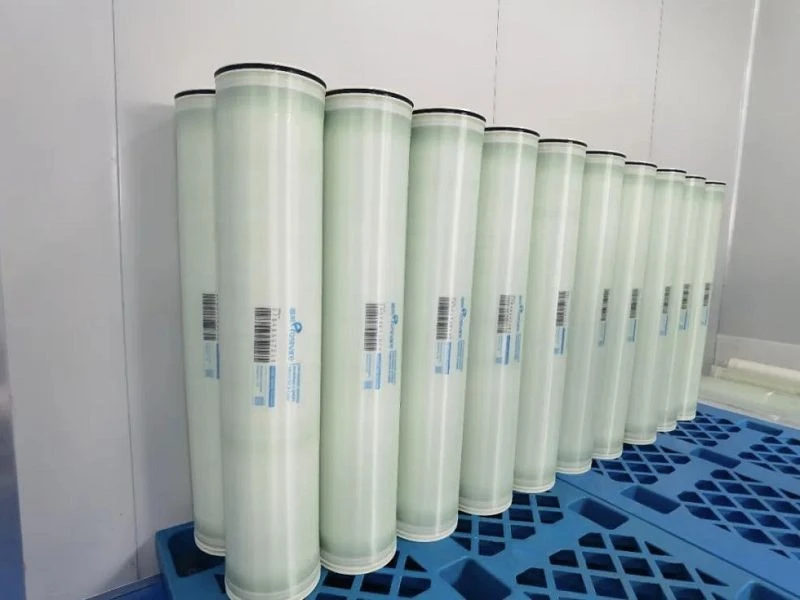
As a supplier of high temperature or oxidation resistant membrane elements, we offer a wide range of products to meet the diverse needs of our customers. Our Unique Membrane Element Resistant To Oxidation 8040 is designed for applications where high oxidation resistance is required. It has been tested under extreme conditions and has proven to be highly effective in preventing oxidation.
Our 8040 Unique Membrane Element Resistant To High Temperatures is suitable for high - temperature applications. It can withstand temperatures up to [specific temperature] without significant degradation of its performance.
We also offer Special Oxidation Resistant Membrane Element, which is a customized solution for customers with special requirements.
Conclusion
The manufacturing of high temperature or oxidation resistant membrane elements is a complex process that involves multiple steps, from material selection to post - processing. Each step is critical to ensuring the quality and performance of the final product. As a supplier, we are committed to using the latest technologies and best practices to produce high - quality membrane elements that meet the needs of our customers.
If you are interested in our high temperature or oxidation resistant membrane elements and would like to discuss your specific requirements, please feel free to contact us. We look forward to the opportunity to work with you and provide you with the best membrane solutions for your applications.
References
- Ashby, M. F., & Jones, D. R. H. (2012). Engineering Materials 1: An Introduction to Properties, Applications and Design. Butterworth - Heinemann.
- Hench, L. L., & West, J. K. (1990). Principles of Sol - Gel Science. Wiley - Interscience.
- Mallick, P. K. (2008). Fiber - Reinforced Composites: Materials, Manufacturing, and Design. CRC Press.
Send Inquiry