


How does a water purifier work in coastal areas?
Oct 20, 2025
Leave a message
Hey there! I'm a supplier of water purifiers, and today I wanna chat about how water purifiers work in coastal areas. Coastal regions have unique water challenges due to the high salt content and various contaminants in seawater and coastal groundwater. So, let's dive right in and explore the ins and outs of water purification in these areas.
The Challenges of Coastal Water
First off, we need to understand what makes coastal water so tricky to purify. Seawater, as you probably know, is chock - full of salt. On average, seawater has a salinity of about 3.5%, which means there are around 35 grams of salt in every liter of water. That's a whole lot of salt to get rid of if you want to turn that water into something drinkable.
Apart from salt, coastal water can also contain other contaminants like heavy metals (such as lead, mercury, and cadmium), bacteria, viruses, and various organic compounds. These contaminants can come from industrial waste, agricultural runoff, and even natural sources like marine life decomposition.
How Water Purifiers Tackle These Challenges
Pre - filtration
The first step in most water purification systems is pre - filtration. This is like the initial screening process. Pre - filters are designed to remove large particles such as sand, silt, and debris from the water. These large particles can clog up the more delicate parts of the purification system later on, so it's important to get rid of them early.
There are different types of pre - filters, including sediment filters and activated carbon filters. Sediment filters are usually made of materials like polypropylene and are designed to trap larger particles. Activated carbon filters, on the other hand, are great at removing chlorine, some organic compounds, and unpleasant odors and tastes from the water.
Reverse Osmosis (RO)
Reverse osmosis is one of the most effective methods for desalinating seawater and purifying coastal water. In a nutshell, RO works by applying pressure to the water to force it through a semi - permeable membrane. This membrane has tiny pores that are small enough to allow water molecules to pass through but block the passage of salt ions and other contaminants.
The pressure needed for RO is quite high, especially when dealing with seawater. Typically, pressures of around 800 to 1000 psi (pounds per square inch) are required. As the water is forced through the membrane, the salt and other contaminants are left behind, and the purified water is collected on the other side.
Nanofiltration
Nanofiltration is another important process in water purification, especially in coastal areas. Nanofiltration membranes have slightly larger pores than RO membranes, which allows them to remove some divalent ions (like calcium and magnesium) and larger organic molecules while still letting some monovalent ions (like sodium) pass through to a certain extent.
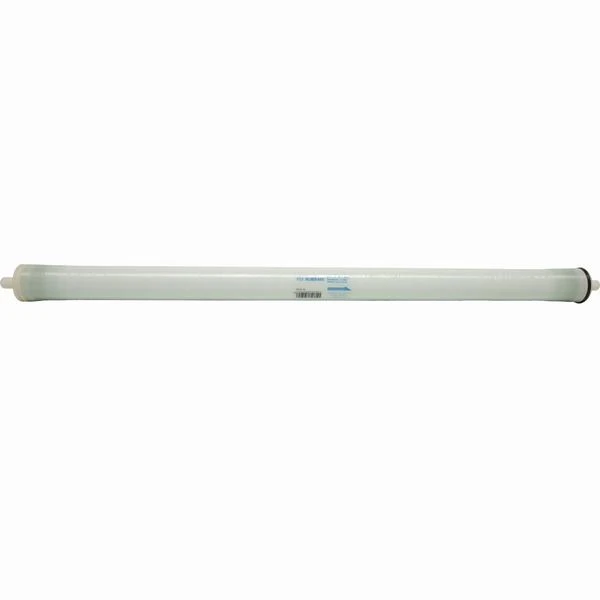
Our company offers some great products in this area, like the NF Multilayer Composite Membrane 8040 And 4040 and the Multilayer Composite Membrane NF8040 And 4040. These membranes are designed to provide efficient nanofiltration, helping to remove a significant amount of contaminants while maintaining a good flow rate. The Nanofiltration Membrane Element 8040 And 4040 is also a popular choice for many coastal water purification projects.
Disinfection
After the water has gone through pre - filtration, RO, and nanofiltration, it's still possible that there are some bacteria and viruses left in the water. That's where disinfection comes in. There are several ways to disinfect water, including chlorination, ultraviolet (UV) disinfection, and ozonation.
Chlorination is one of the most common methods. Chlorine is a powerful disinfectant that can kill most bacteria and viruses. However, it can also react with some organic compounds in the water to form potentially harmful by - products.
UV disinfection is a chemical - free alternative. UV light damages the DNA of bacteria and viruses, preventing them from reproducing and rendering them harmless. Ozonation is another effective disinfection method. Ozone is a highly reactive form of oxygen that can quickly kill bacteria, viruses, and other microorganisms.
Advantages of Using Our Water Purifiers in Coastal Areas
Our water purifiers are specifically designed to handle the unique challenges of coastal water. They are built with high - quality components that can withstand the harsh conditions of coastal environments. The RO membranes in our systems are made to be highly efficient at removing salt, with a rejection rate of over 99%. This means that almost all of the salt in the water is removed, leaving you with clean, drinkable water.
Our nanofiltration membranes, like the ones I mentioned earlier, are also top - notch. They can remove a wide range of contaminants while maintaining a good water flow rate, which is crucial for large - scale water purification projects.
In addition, our water purifiers are easy to maintain. We provide comprehensive after - sales support, including regular maintenance checks and replacement of parts when needed. This ensures that your water purification system keeps running smoothly for a long time.
Why You Should Consider Buying from Us
If you're in a coastal area and in need of a water purification system, there are several reasons why you should choose our products. First of all, we have a lot of experience in the water purification industry. We've been in business for years and have worked on many coastal water purification projects. That means we know what works and what doesn't when it comes to purifying coastal water.

Secondly, our products are cost - effective. We understand that setting up a water purification system can be a significant investment, so we strive to offer high - quality products at competitive prices. You'll get a lot of bang for your buck with our water purifiers.
Finally, we're committed to customer satisfaction. We'll work with you every step of the way, from helping you choose the right system for your needs to providing ongoing support after the installation.
If you're interested in learning more about our water purifiers or if you want to discuss a potential purchase, don't hesitate to reach out. We're here to help you find the best water purification solution for your coastal area needs.
Conclusion
In conclusion, water purification in coastal areas is a complex but achievable process. By using a combination of pre - filtration, reverse osmosis, nanofiltration, and disinfection, water purifiers can effectively remove salt and other contaminants from coastal water, making it safe to drink. Our water purifiers are designed to meet the unique challenges of coastal water and offer many advantages in terms of efficiency, quality, and cost - effectiveness.
If you're in the market for a water purification system for your coastal area, I encourage you to get in touch with us. We'd love to have a chat with you about your needs and see how we can help you get clean, safe water.
References
- "Water Treatment Handbook" by World Water Works
- "Desalination: Principles and Applications" by George Tchobanoglous and Franklin L. Burton
Send Inquiry