


How to control the pore size distribution of industrial membranes?
Aug 19, 2025
Leave a message
As an industrial membrane supplier, I understand the critical role that pore size distribution plays in the performance of industrial membranes. The pore size distribution directly affects the membrane's selectivity, permeability, and fouling resistance, which are all key factors in various industrial applications such as water treatment, gas separation, and food and beverage processing. In this blog, I will share some insights on how to control the pore size distribution of industrial membranes.
Understanding the Importance of Pore Size Distribution
Before delving into the methods of controlling pore size distribution, it is essential to understand why it is so important. The pore size of a membrane determines which molecules or particles can pass through it and which are retained. A well - controlled pore size distribution ensures that the membrane can effectively separate the desired components from a mixture.
For example, in water treatment, a membrane with a proper pore size distribution can remove contaminants such as bacteria, viruses, and suspended solids while allowing water molecules to pass through. In gas separation, the pore size determines which gas components can be selectively permeated, enabling the separation of different gases.
Factors Affecting Pore Size Distribution
Several factors can influence the pore size distribution of industrial membranes. These include the polymer material used, the membrane fabrication method, and the additives incorporated during the manufacturing process.
Polymer Material
The choice of polymer is crucial as different polymers have different inherent properties that affect pore formation. For instance, polymers with high chain flexibility tend to form larger pores, while more rigid polymers may result in smaller pores. Additionally, the chemical structure of the polymer can also impact the interaction between the polymer and the solvent during the membrane formation process, which in turn affects the pore size distribution.
Membrane Fabrication Method
There are several methods for fabricating industrial membranes, such as phase inversion, stretching, and track - etching. Each method has its own characteristics and can lead to different pore size distributions.

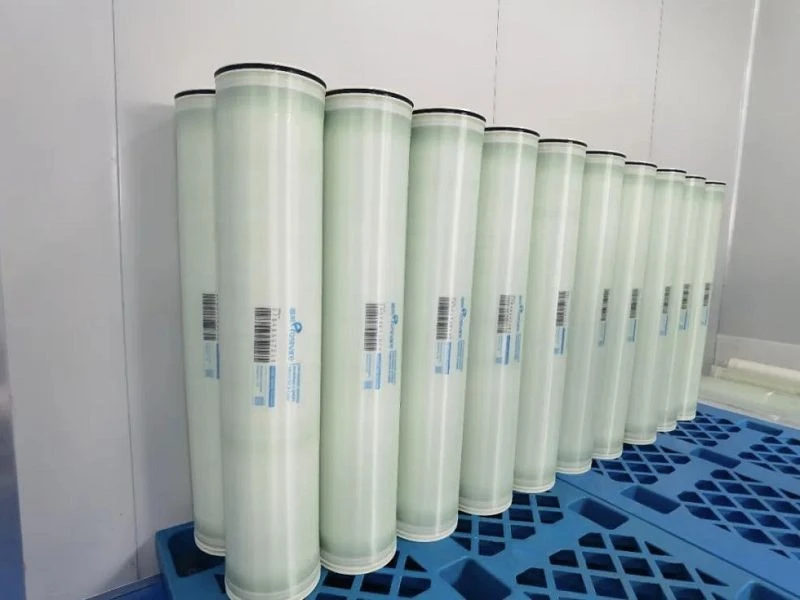
- Phase Inversion: This is one of the most commonly used methods for manufacturing porous membranes. It involves the transformation of a polymer solution into a solid membrane by inducing phase separation. The rate of phase separation, which can be controlled by factors such as the type and concentration of the solvent, the temperature, and the addition of non - solvents, has a significant impact on the pore size distribution. A rapid phase separation usually leads to a broader pore size distribution, while a slow phase separation can result in a more uniform pore size.
- Stretching: This method is used to create pores in semi - crystalline polymers. By stretching the polymer film, the crystalline regions are deformed, and pores are formed at the boundaries between the crystalline and amorphous regions. The stretching ratio and the temperature during stretching can be adjusted to control the pore size and its distribution.
- Track - Etching: In this method, a thin polymer film is bombarded with high - energy particles to create tracks. These tracks are then etched with a chemical solution to form pores. The pore size can be controlled by adjusting the etching time and the concentration of the etching solution.
Additives
Additives can be used to modify the pore size distribution of membranes. For example, pore - forming agents can be added to the polymer solution during the membrane fabrication process. These agents can dissolve during the phase inversion process, leaving behind pores. The type and amount of pore - forming agents can be adjusted to control the pore size and its distribution. Other additives, such as surfactants, can also affect the pore size by altering the surface tension and the interfacial properties of the polymer solution.
Methods to Control Pore Size Distribution
Based on the above factors, here are some effective methods to control the pore size distribution of industrial membranes.
Optimization of Polymer Chemistry
By carefully selecting and modifying the polymer material, we can control the pore size distribution. For example, copolymerization can be used to combine different monomers with different properties. This allows us to tailor the polymer's chemical structure and physical properties, which in turn affects the pore formation during the membrane fabrication process. Additionally, post - treatment of the polymer, such as cross - linking, can also be used to adjust the pore size and its distribution.
Precise Control of Fabrication Parameters
As mentioned earlier, the fabrication method and its parameters have a significant impact on the pore size distribution. Therefore, precise control of these parameters is essential. For phase inversion, we can optimize the solvent - non - solvent system, the temperature, and the evaporation rate to achieve a more uniform pore size distribution. In the case of stretching, the stretching speed, ratio, and temperature should be carefully controlled.
Use of Nanoparticles
Nanoparticles can be incorporated into the polymer matrix to control the pore size distribution. These nanoparticles can act as templates for pore formation. By adjusting the size, shape, and concentration of the nanoparticles, we can control the pore size and its distribution. For example, silica nanoparticles can be added to the polymer solution. After the membrane is formed, the silica nanoparticles can be removed by etching, leaving behind pores with a size similar to that of the nanoparticles.
Our Company's Solutions for Controlled Pore Size Distribution
At our company, we have extensive experience in manufacturing industrial membranes with well - controlled pore size distributions. We offer a range of membranes suitable for different applications.
- 8040 Unique Membrane Element Resistant To High Temperatures: This membrane is designed for applications where high - temperature resistance is required. Our advanced manufacturing techniques ensure that it has a uniform pore size distribution, which is crucial for maintaining its separation performance under high - temperature conditions.
- Special Oxidation Resistant Membrane Element: In highly oxidative environments, this membrane can effectively separate different components. The controlled pore size distribution allows for high selectivity and permeability, even in the presence of strong oxidants.
- Special High Temperature Resistant Membrane Element: Similar to the 8040 Unique Membrane Element, this membrane is also resistant to high temperatures. Our manufacturing process ensures a precise pore size distribution, which is essential for its long - term performance in high - temperature applications.
Guidance for Contact and Procurement
If you are interested in our industrial membranes with precisely controlled pore size distributions, we welcome you to contact us for further discussion. Whether you are in the water treatment, gas separation, or food and beverage processing industry, our membranes can provide you with reliable separation solutions. We are committed to providing high - quality products and excellent customer service. Feel free to reach out to us to start a procurement negotiation and find the most suitable membrane for your specific needs.
References
- Mulder, M. (1996). Basic Principles of Membrane Technology. Kluwer Academic Publishers.
- Baker, R. W. (2004). Membrane Technology and Applications. John Wiley & Sons.
- Strathmann, H. (1990). Synthetic Polymeric Membranes: A Structural Perspective. Springer - Verlag.
Send Inquiry