


Is the pro series ro membrane element resistant to fouling?
May 21, 2026
Leave a message
Is the pro series ro membrane element resistant to fouling?
As a supplier of Pro Series RO membrane elements, I am often asked about the fouling resistance of our products. Fouling is a significant concern in reverse osmosis (RO) systems, as it can lead to reduced membrane performance, increased energy consumption, and shorter membrane lifespan. In this blog post, I will delve into the fouling resistance of our Pro Series RO membrane elements and explain how they can help you maintain a more efficient and reliable RO system.

Understanding Fouling in RO Systems
Fouling in RO systems occurs when various substances, such as suspended solids, colloids, organic matter, and microorganisms, accumulate on the membrane surface. This accumulation forms a layer that restricts the flow of water through the membrane, reducing the permeate flux and increasing the operating pressure required to maintain the desired water production rate. Over time, fouling can also cause irreversible damage to the membrane, leading to a permanent decrease in performance.
There are several types of fouling that can affect RO membranes, including:
- Particulate fouling: Caused by the deposition of suspended solids, such as sand, silt, and clay, on the membrane surface.
- Colloidal fouling: Resulting from the aggregation of colloidal particles, which are smaller than suspended solids but larger than dissolved molecules.
- Organic fouling: Caused by the adsorption of organic matter, such as humic acids, proteins, and carbohydrates, on the membrane surface.
- Biological fouling: Resulting from the growth of microorganisms, such as bacteria, fungi, and algae, on the membrane surface.
The Pro Series RO Membrane Elements
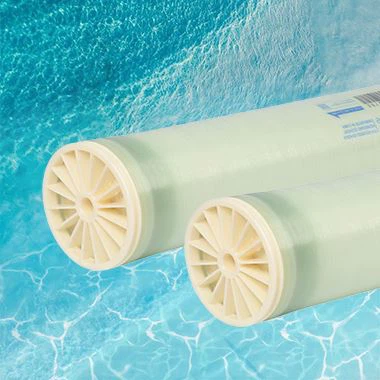
Our Pro Series RO membrane elements are designed to provide high performance and reliability in a wide range of applications. These elements are available in various configurations, including Pro-BW Brackish Water RO Membrane Element, Element Of A Low Pressure Membrane 8040, and Extreme Anti-fouling Membrane Element XFR8040, to meet the specific needs of different customers.
One of the key features of our Pro Series RO membrane elements is their excellent fouling resistance. This is achieved through a combination of advanced membrane materials and innovative design techniques.
Advanced Membrane Materials
Our Pro Series RO membrane elements are made from high-quality polyamide thin-film composite (TFC) membranes. These membranes have a dense, selective layer that allows water molecules to pass through while rejecting dissolved salts and other contaminants. The TFC membranes also have a smooth surface, which reduces the adhesion of foulants and makes it easier to clean the membrane.
In addition to the polyamide TFC membranes, our Pro Series RO membrane elements also incorporate other advanced materials, such as hydrophilic polymers and anti-fouling coatings. These materials help to further improve the fouling resistance of the membranes by reducing the surface energy and preventing the attachment of foulants.
Innovative Design Techniques
Our Pro Series RO membrane elements are designed with several innovative features that help to improve their fouling resistance. For example, the elements have a wide feed spacer that allows for better flow distribution and reduces the risk of particulate fouling. The feed spacer also helps to prevent the accumulation of foulants in the membrane channels, which can lead to clogging and reduced performance.
Another innovative design feature of our Pro Series RO membrane elements is the use of a spiral-wound configuration. This configuration allows for a large membrane surface area to be packed into a small volume, which increases the water production rate and reduces the operating pressure required. The spiral-wound configuration also helps to improve the fouling resistance of the membranes by providing a more uniform flow distribution and reducing the risk of dead zones where foulants can accumulate.
Testing and Validation
To ensure the fouling resistance of our Pro Series RO membrane elements, we conduct extensive testing and validation in our state-of-the-art laboratories. Our testing procedures include both short-term and long-term performance tests, as well as fouling simulation tests.
In the short-term performance tests, we measure the permeate flux, salt rejection, and operating pressure of the membrane elements under different operating conditions. These tests help us to evaluate the initial performance of the membrane elements and ensure that they meet our quality standards.
In the long-term performance tests, we operate the membrane elements for an extended period of time to simulate real-world operating conditions. These tests help us to evaluate the long-term performance and fouling resistance of the membrane elements and ensure that they can maintain their performance over time.
In the fouling simulation tests, we expose the membrane elements to various types of foulants, such as suspended solids, colloids, organic matter, and microorganisms, to evaluate their fouling resistance. These tests help us to identify the factors that contribute to fouling and develop strategies to prevent or reduce fouling.
Benefits of Using Pro Series RO Membrane Elements
Using our Pro Series RO membrane elements can provide several benefits for your RO system, including:
- Improved fouling resistance: The advanced membrane materials and innovative design techniques used in our Pro Series RO membrane elements help to reduce the risk of fouling and maintain the performance of the membrane over time.
- Higher water production rate: The large membrane surface area and efficient flow distribution of our Pro Series RO membrane elements allow for a higher water production rate, which can help to reduce the operating cost of your RO system.
- Lower operating pressure: The low fouling tendency of our Pro Series RO membrane elements reduces the operating pressure required to maintain the desired water production rate, which can help to reduce the energy consumption of your RO system.
- Longer membrane lifespan: The excellent fouling resistance of our Pro Series RO membrane elements helps to extend the lifespan of the membrane, which can help to reduce the replacement cost of your RO system.
Conclusion
In conclusion, our Pro Series RO membrane elements are highly resistant to fouling and can provide a reliable and efficient solution for your RO system. The advanced membrane materials and innovative design techniques used in our Pro Series RO membrane elements help to reduce the risk of fouling and maintain the performance of the membrane over time. If you are looking for a high-quality RO membrane element that can provide excellent fouling resistance, please contact us to discuss your specific needs. We would be happy to help you select the right membrane element for your application and provide you with the support and service you need to ensure the success of your RO system.
References
- Crittenden, J. C., Trussell, R. R., Hand, D. W., Howe, K. J., & Tchobanoglous, G. (2012). MWH's Water Treatment: Principles and Design (3rd ed.). John Wiley & Sons.
- Greenlee, L. F., Lawler, D. F., Freeman, B. D., Marrot, B., & Moulin, P. (2009). Reverse osmosis desalination: Water sources, technology, and today's challenges. Water Research, 43(9), 2317-2348.
- Mulder, M. (1996). Basic Principles of Membrane Technology (2nd ed.). Kluwer Academic Publishers.
Send Inquiry