


What is the impact of RO membrane cleaning on water production rate?
Dec 08, 2025
Leave a message
Yo, what's up everyone! I'm a supplier of RO membrane cleaning services, and today I wanna talk about something super important in the water treatment game: the impact of RO membrane cleaning on water production rate.
Let's start with the basics. RO, or reverse osmosis, membranes are the heart of many water purification systems. They work by forcing water through a semi - permeable membrane, leaving behind contaminants like salts, bacteria, and other impurities. But over time, these membranes get clogged up. It's like when your sink drain gets all gunked up with hair and soap scum. When RO membranes are dirty, they don't work as well, and that directly affects the water production rate.
You see, a clean RO membrane has a nice, open structure that allows water to flow through easily. Think of it like a well - maintained highway with no traffic jams. Water molecules can zip through the membrane pores, and the system can produce a good amount of clean water in a short time. But when the membrane gets fouled, it's like there's a huge pile - up on the highway. The water has a hard time getting through, and the water production rate drops.
There are different types of fouling that can mess with RO membranes. One common type is organic fouling. This happens when things like algae, bacteria, and natural organic matter stick to the membrane surface. Another type is inorganic fouling, which is caused by stuff like calcium carbonate, silica, and iron deposits. And then there's colloidal fouling, where tiny particles in the water clump together and form a layer on the membrane.
So, how does cleaning the RO membrane help boost the water production rate? Well, when we clean the membrane, we're basically clearing out all that gunk. We use special cleaning chemicals and techniques to break down and remove the fouling agents. For example, if it's organic fouling, we might use a detergent - based cleaner that can dissolve the organic matter. If it's inorganic fouling, we could use an acid or a base cleaner to dissolve the mineral deposits.
After the cleaning process, the membrane pores open up again. It's like we've fixed the traffic jam on the highway. Water can now flow through the membrane more freely, and the water production rate starts to go back up. In some cases, we've seen a significant increase in the water production rate after a proper RO membrane cleaning. It can go from a slow trickle to a nice, steady stream.
Let's talk about some of the RO membrane products we deal with. We have the Domestic RO Membrane Element 2812. This is a great option for small - scale domestic water purification systems. It's designed to be efficient and reliable, but like any RO membrane, it needs regular cleaning to keep its water production rate up.
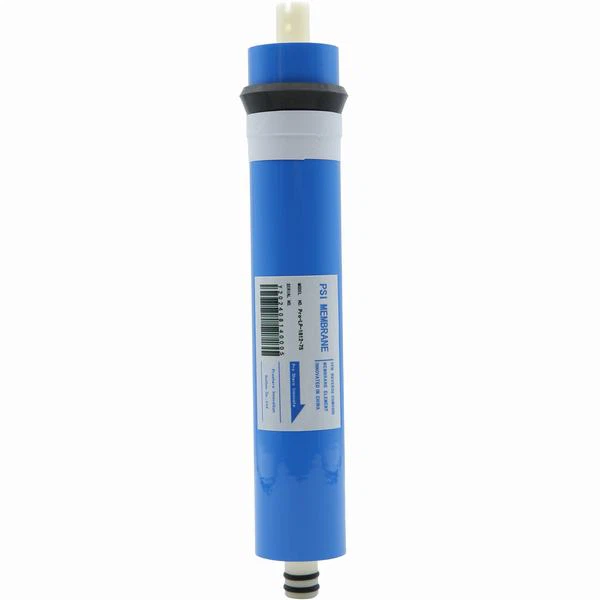

Another popular product is the Residential RO Membrane 3012. This membrane is a bit larger and can handle a higher water flow rate when it's clean. But if it gets fouled, its performance will take a nosedive. That's where our cleaning services come in handy.
We also offer cleaning for the Domestic Reverse Osmosis Membrane 1812. This is a compact membrane that's perfect for smaller homes or apartments. By keeping it clean, we can ensure that it continues to produce a good amount of clean water for daily use.
Now, it's important to note that the impact of RO membrane cleaning on the water production rate isn't always the same for every system. There are a few factors that can affect how much the water production rate increases after cleaning. One factor is the severity of the fouling. If the membrane is only slightly fouled, we might see a quick and significant improvement in the water production rate. But if it's severely fouled, it might take a few cleaning cycles to get the production rate back to its optimal level.
Another factor is the age of the membrane. Older membranes might not respond as well to cleaning as newer ones. Over time, the membrane material can start to degrade, and even after cleaning, it might not be able to reach the same water production rate as when it was brand new.
The quality of the cleaning process also matters. A proper cleaning job involves using the right cleaning chemicals, at the right concentration, and for the right amount of time. If the cleaning is done incorrectly, it might not remove all the fouling, and the water production rate won't improve as much.
In addition to increasing the water production rate, cleaning RO membranes has other benefits too. It can extend the lifespan of the membrane. A fouled membrane has to work harder to produce the same amount of water, which can cause more wear and tear on the membrane material. By keeping the membrane clean, we can reduce the stress on it and make it last longer.
It also helps improve the quality of the produced water. A fouled membrane might not be able to remove contaminants as effectively as a clean one. So, when we clean the membrane, we're not only getting more water out, but we're also getting cleaner water.
If you're having issues with low water production rate in your RO system, it's definitely worth considering getting your RO membrane cleaned. As a RO membrane cleaning supplier, we have the expertise and the tools to get the job done right. We can assess the condition of your membrane, determine the best cleaning method, and get your water production rate back on track.
Whether you're using a Domestic RO Membrane Element 2812, a Residential RO Membrane 3012, or a Domestic Reverse Osmosis Membrane 1812, we've got you covered. Don't let a fouled membrane slow down your water production. Reach out to us, and let's talk about how we can help you get the most out of your RO system.
If you're interested in our RO membrane cleaning services or have any questions about how it can impact your water production rate, feel free to contact us. We're here to help you make your water purification system work at its best.
References
- Cheryan, M. Ultrafiltration and Microfiltration Handbook. Technomic Publishing, 1998.
- Crittenden, J. C., et al. Water Treatment: Principles and Design. John Wiley & Sons, 2012.
- Belfort, G., Davis, R. H., & Zydney, A. L. "The behavior of suspensions and macromolecular solutions in cross - flow microfiltration." Journal of Membrane Science, 1994.
Send Inquiry