


What is the membrane permeability coefficient of nf membrane element?
May 12, 2025
Leave a message
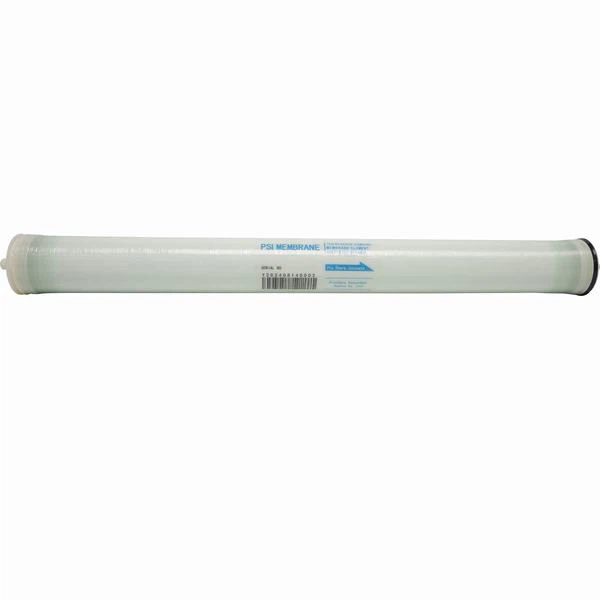
The membrane permeability coefficient is a critical parameter when it comes to understanding the performance of nanofiltration (NF) membrane elements. As a supplier of NF membrane elements, I am often asked about what this coefficient means and how it impacts the overall functionality of our products. In this blog, I will delve into the concept of the membrane permeability coefficient of NF membrane elements, its significance, and how it relates to our offerings, such as the Multilayer Composite Membrane NF8040 And 4040, Nanofiltration Membrane Element, and Nanofiltration Membrane Element 8040 And 4040.
Understanding the Membrane Permeability Coefficient
The membrane permeability coefficient, often denoted as P, is a measure of the ability of a membrane to allow a particular substance to pass through it. In the context of NF membrane elements, it quantifies the rate at which water and solutes can permeate the membrane under a given driving force, typically a pressure difference. This coefficient is influenced by several factors, including the membrane's material, structure, pore size, and the properties of the permeating substances.

Mathematically, the membrane permeability coefficient can be defined using Fick's first law of diffusion. For a solute passing through a membrane, the flux (J), which is the amount of solute passing through a unit area of the membrane per unit time, is proportional to the concentration gradient across the membrane and the membrane permeability coefficient. The equation is given by:
J = P * (ΔC / Δx)
where J is the solute flux, P is the membrane permeability coefficient, ΔC is the concentration difference of the solute across the membrane, and Δx is the thickness of the membrane.
In the case of water permeation through an NF membrane, the driving force is usually the pressure difference (ΔP) rather than the concentration gradient. The water flux (Jw) can be expressed as:
Jw = Lp * ΔP
where Jw is the water flux, Lp is the hydraulic permeability coefficient, which is a type of membrane permeability coefficient specifically for water, and ΔP is the pressure difference across the membrane.
Significance of the Membrane Permeability Coefficient in NF Membrane Elements
The membrane permeability coefficient plays a crucial role in determining the performance of NF membrane elements. A higher permeability coefficient means that the membrane allows a greater amount of water or solutes to pass through it per unit time, which is generally desirable in applications such as water purification, desalination, and wastewater treatment.
Water Flux and Productivity
In water treatment processes, a high water permeability coefficient (Lp) translates to a higher water flux. This means that more water can be processed through the membrane in a given period, increasing the productivity of the system. For example, in a large - scale water purification plant, a membrane with a high Lp can reduce the number of membrane elements required to achieve a certain water production rate, thereby lowering the capital and operating costs.
Solute Rejection
While a high water permeability is desirable, the membrane also needs to reject certain solutes effectively. The solute permeability coefficient is related to the membrane's ability to retain specific substances. A lower solute permeability coefficient for contaminants such as salts, heavy metals, and organic compounds indicates better rejection performance. NF membranes are designed to have a balance between high water permeability and high solute rejection, which is crucial for producing high - quality treated water.
Energy Efficiency
The membrane permeability coefficient also affects the energy consumption of the NF process. A membrane with a higher permeability requires less pressure to achieve a given water flux. This reduces the energy required to operate the pumps in the system, making the overall process more energy - efficient. In today's environmentally conscious world, energy efficiency is a key consideration for many industries using NF membrane technology.
Factors Affecting the Membrane Permeability Coefficient
Membrane Material
The choice of membrane material has a significant impact on the membrane permeability coefficient. Different materials have different chemical and physical properties, which affect the interaction between the membrane and the permeating substances. For example, polymers such as polyamide are commonly used in NF membranes due to their good chemical stability, mechanical strength, and tunable pore size. Polyamide - based membranes can be engineered to have different permeability coefficients by modifying the polymer structure during the manufacturing process.

Pore Size and Structure
The pore size and structure of the NF membrane are crucial factors influencing the membrane permeability coefficient. Smaller pore sizes generally result in lower solute permeability, which is beneficial for solute rejection. However, if the pore size is too small, it can also reduce the water permeability. Therefore, optimizing the pore size is essential to achieve the desired balance between water flux and solute rejection. Additionally, the pore structure, such as the porosity and tortuosity, can affect the diffusion path of the permeating substances and thus the permeability coefficient.
Operating Conditions
The operating conditions, such as pressure, temperature, and feed solution composition, can also affect the membrane permeability coefficient. Increasing the pressure generally increases the water flux, but it may also have an impact on the solute rejection. Higher temperatures can increase the diffusion rate of the permeating substances, leading to an increase in the permeability coefficient. The composition of the feed solution, including the concentration of salts and other solutes, can affect the membrane's surface properties and the interactions between the solutes and the membrane, thereby influencing the permeability coefficient.
Our NF Membrane Elements and the Membrane Permeability Coefficient
At our company, we are committed to providing high - quality NF membrane elements with optimized membrane permeability coefficients. Our Multilayer Composite Membrane NF8040 And 4040 is designed using advanced manufacturing techniques to achieve a balance between high water permeability and excellent solute rejection. The multilayer structure allows for better control of the pore size and distribution, resulting in a more consistent and reliable membrane permeability coefficient.
Our Nanofiltration Membrane Element is engineered to meet the diverse needs of different applications. Whether it is for drinking water purification, industrial wastewater treatment, or food and beverage processing, our membranes are designed to have the appropriate permeability coefficients to ensure optimal performance.
The Nanofiltration Membrane Element 8040 And 4040 series offers a range of options with different membrane permeability coefficients to suit various operating conditions and performance requirements. These elements are tested rigorously to ensure that they meet the highest quality standards and provide consistent results over time.
Contact Us for Purchase and Consultation
If you are interested in learning more about the membrane permeability coefficient of our NF membrane elements or are considering purchasing our products, we encourage you to contact us. Our team of experts is ready to provide you with detailed information, technical support, and guidance on selecting the most suitable membrane elements for your specific application. Whether you are a small - scale water treatment plant or a large industrial facility, we have the solutions to meet your needs.
References
- Mulder, M. (1996). Basic Principles of Membrane Technology. Kluwer Academic Publishers.
- Baker, R. W. (2004). Membrane Technology and Applications. John Wiley & Sons.
- Cheryan, M. (1998). Ultrafiltration and Microfiltration Handbook. Technomic Publishing Company.
Send Inquiry