


Can nf membrane element be used for mining wastewater treatment?
Dec 18, 2025
Leave a message
Can NF Membrane Element Be Used for Mining Wastewater Treatment?
Mining activities are essential for extracting valuable minerals and resources that power various industries worldwide. However, they also generate a significant amount of wastewater containing a complex mixture of pollutants such as heavy metals, suspended solids, and dissolved salts. The proper treatment of mining wastewater is crucial to protect the environment, ensure the safety of water supplies, and comply with stringent environmental regulations. In recent years, nanofiltration (NF) membrane technology has emerged as a potential solution for mining wastewater treatment. In this blog, as a NF membrane element supplier, I will explore the feasibility and effectiveness of using NF membrane elements in this context.
Understanding NF Membrane Elements
NF membrane elements are a type of semi - permeable membrane that lies between reverse osmosis (RO) and ultrafiltration (UF) membranes in terms of pore size and separation characteristics. These membranes have pores in the range of 1 - 10 nanometers, which allows them to reject particles, colloids, and multivalent ions while allowing monovalent ions and water molecules to pass through to a certain extent.
Our company offers a range of high - quality NF membrane elements, including the Multilayer Composite Membrane NF8040 And 4040, NF 98 Nanofiltration Membrane Element, and Nanofiltration Membrane Element 8040 And 4040. These membrane elements are designed with advanced materials and manufacturing processes to provide high rejection rates, good chemical stability, and long service life.
Advantages of Using NF Membrane Elements in Mining Wastewater Treatment
-
Heavy Metal Removal
Mining wastewater often contains high concentrations of heavy metals such as lead, mercury, cadmium, and copper. These heavy metals are toxic to humans, animals, and the environment. NF membrane elements have a high rejection rate for multivalent heavy metal ions. The negatively charged surface of the NF membrane can electrostatically repel negatively - charged heavy metal complexes or ions, allowing for effective separation. For example, in wastewater containing lead ions, the NF membrane can reject a large proportion of lead, reducing its concentration to a level that meets environmental standards. -
Suspended Solids and Colloid Removal
Suspended solids and colloids are common contaminants in mining wastewater. They can cause turbidity and reduce the clarity of the water. NF membranes can effectively remove these particles due to their small pore size. The physical sieving effect of the membrane prevents the passage of suspended solids and colloids, resulting in clear filtrate. This is important not only for aesthetic reasons but also for preventing fouling of downstream treatment processes. -
Selective Separation of Ions
One of the unique features of NF membranes is their ability to selectively separate ions based on their charge and size. In mining wastewater, there may be a mixture of monovalent and multivalent ions. NF membranes can allow the passage of some monovalent ions while rejecting multivalent ions. This selective separation can be useful for processes where the recovery of certain ions is desired, or for reducing the total dissolved solids (TDS) in the wastewater without completely desalinating it. For instance, in some cases, the separation of sodium ions from calcium and magnesium ions can be of great value. -
Energy Efficiency
Compared to reverse osmosis membranes, NF membranes operate at lower pressures. This results in lower energy consumption during the filtration process. In large - scale mining wastewater treatment plants, energy costs are a significant part of the operating expenses. The relatively low - pressure operation of NF membranes can lead to substantial savings in energy, making the treatment process more economically viable.
Challenges and Considerations
- Fouling
Fouling is a major challenge in membrane - based wastewater treatment. In mining wastewater, the presence of suspended solids, organic matter, and scaling - prone ions can cause fouling of the NF membrane. Fouling reduces the membrane's flux and rejection performance over time, increasing the operating cost due to frequent cleaning and membrane replacement. To mitigate fouling, proper pre - treatment steps such as sedimentation, filtration, and chemical conditioning are necessary. Additionally, the use of anti - fouling agents and regular membrane cleaning can help maintain the membrane's performance. - Membrane Compatibility with Wastewater Chemistry
Mining wastewater can have a wide range of chemical compositions, including high acidity or alkalinity, and the presence of various chemicals used in the mining process. The NF membrane must be compatible with the specific chemistry of the wastewater. Some membranes may be damaged by strong acids or bases, or by certain chemicals such as oxidants or reducing agents. Therefore, careful selection of the appropriate NF membrane element based on the wastewater characteristics is crucial. - Cost - Benefit Analysis
Although NF membrane technology offers many advantages, the initial investment in membrane equipment and the ongoing cost of membrane replacement and maintenance need to be considered. A detailed cost - benefit analysis should be conducted to determine whether the use of NF membrane elements is economically feasible for a particular mining wastewater treatment project. Factors such as the volume of wastewater, the required treatment level, and the cost of alternative treatment methods should be taken into account.
Case Studies
There have been several successful applications of NF membrane technology in mining wastewater treatment. In a gold mining operation, the wastewater contained high levels of heavy metals and suspended solids. By using NF membrane elements, the heavy metal concentration was reduced to below the regulatory limits, and the suspended solids were effectively removed. The treated water was then reused in the mining process, reducing the demand for fresh water and minimizing the environmental impact.
Another case involved a copper mining site. The NF membrane was used to separate copper ions from other ions in the wastewater. The copper ions were concentrated in the retentate, which could be further processed for copper recovery. The permeate water had a significantly reduced TDS and was suitable for discharge or reuse.
Conclusion
In conclusion, NF membrane elements can be effectively used for mining wastewater treatment. Their ability to remove heavy metals, suspended solids, and selectively separate ions makes them a promising technology for this challenging application. However, challenges such as fouling, membrane compatibility, and cost - effectiveness need to be carefully addressed.
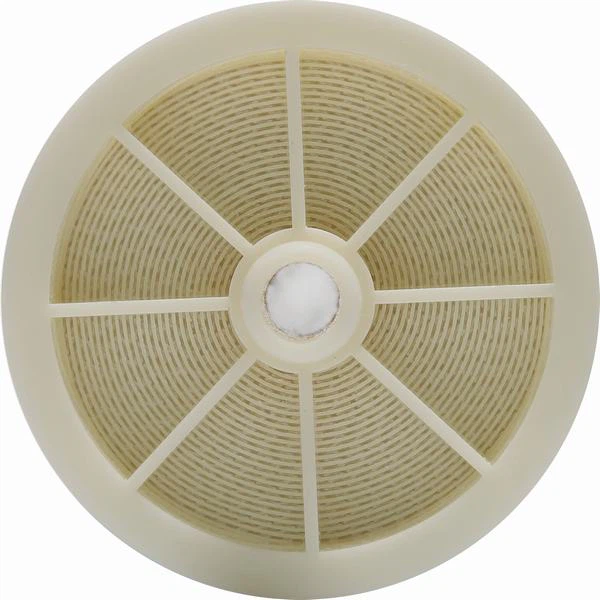

As a NF membrane element supplier, we are committed to providing high - quality membrane products and technical support to help mining companies achieve efficient and sustainable wastewater treatment. Our Multilayer Composite Membrane NF8040 And 4040, NF 98 Nanofiltration Membrane Element, and Nanofiltration Membrane Element 8040 And 4040 are designed to meet the diverse needs of mining wastewater treatment projects.
If you are interested in learning more about our NF membrane products or discussing your specific mining wastewater treatment requirements, please feel free to contact us for a detailed consultation and procurement negotiation. We look forward to working with you to achieve your environmental and operational goals.
References
- Cheryan, M. Ultrafiltration and Microfiltration Handbook. Technomic Publishing Co., 1998.
- Mulder, M. Basic Principles of Membrane Technology. Kluwer Academic Publishers, 1996.
- Nghiem, L. D., Schäfer, A. I., & Elimelech, M. (2006). Nanofiltration membranes review: Recent advances and future prospects. Desalination, 187(1 - 3), 271 - 288.
- Vrijenhoek, E. M., Hong, S. - H., & Elimelech, M. (2001). Critical factors governing colloidal fouling of reverse osmosis and nanofiltration membranes. Journal of Membrane Science, 188(1), 115 - 128.
Send Inquiry