


How do nanofiltration membranes perform in low - temperature environments?
May 07, 2026
Leave a message
How do nanofiltration membranes perform in low - temperature environments?
As a supplier of nanofiltration membranes, I've witnessed firsthand the diverse challenges and applications our products face. One area that often raises questions is the performance of nanofiltration membranes in low - temperature environments. In this blog, I'll delve into the intricacies of how these membranes behave under cold conditions, exploring the science behind it and the implications for various industries.
The Basics of Nanofiltration Membranes
Before we discuss low - temperature performance, let's briefly recap what nanofiltration membranes are. Nanofiltration (NF) is a pressure - driven membrane filtration process. These membranes have a pore size typically in the range of 1 - 10 nanometers, which allows them to separate dissolved substances based on their size and charge. They are commonly used in water treatment, food and beverage processing, pharmaceutical manufacturing, and many other industries to remove contaminants such as salts, organic compounds, and microorganisms.
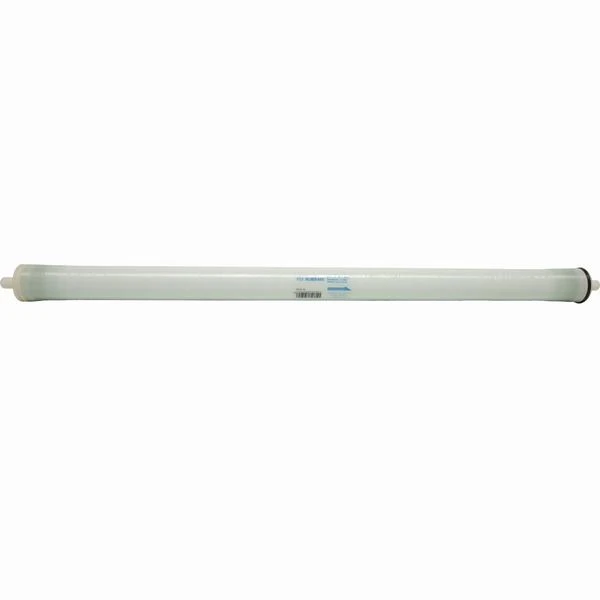
Our company offers a range of nanofiltration membrane products, such as the Compact Ultrafiltration Membrane Element, Multilayer Composite Membrane NF8040 And 4040 and Nanofiltration Membrane Element 8040 And 4040. Each of these products is designed to meet specific filtration requirements, but they all share the fundamental principles of nanofiltration.
Impact of Low Temperatures on Membrane Performance
Permeability
One of the most significant effects of low temperatures on nanofiltration membranes is a decrease in permeability. Permeability refers to the rate at which water or other fluids can pass through the membrane. In general, as the temperature drops, the viscosity of the fluid increases. For example, when water is cooled, its molecules move more slowly and become more resistant to flow. This increased viscosity makes it more difficult for the fluid to pass through the small pores of the nanofiltration membrane, resulting in a lower permeate flux.
The relationship between temperature and permeability can be described by the Arrhenius equation, which shows that the permeate flux is exponentially related to the reciprocal of the absolute temperature. In practical terms, a decrease in temperature by 10°C can lead to a reduction in permeate flux of approximately 20 - 30%. This means that in low - temperature environments, more pressure may be required to maintain the same level of filtration capacity.
Rejection Rate
The rejection rate of a nanofiltration membrane is another crucial parameter, which measures the membrane's ability to retain specific solutes. Low temperatures can have both positive and negative effects on the rejection rate.
On one hand, the increased viscosity of the fluid at low temperatures can enhance the rejection of some solutes. The slower - moving fluid allows more time for the solutes to interact with the membrane surface, increasing the likelihood of rejection. For example, the rejection of divalent ions such as calcium and magnesium may improve slightly in cold conditions.
On the other hand, low temperatures can also cause changes in the membrane structure. Some polymers used in nanofiltration membranes may become more rigid at low temperatures, which could potentially lead to the formation of small cracks or changes in pore size. These structural changes may result in a decrease in the rejection rate for certain solutes, especially those with a size close to the membrane pore size.

Membrane Fouling
Fouling is a major issue in membrane filtration, and low - temperature environments can exacerbate this problem. At low temperatures, the growth rate of microorganisms is generally slower, which might seem beneficial at first glance. However, the reduced fluid velocity and increased viscosity can cause a higher concentration of suspended solids and organic matter to accumulate on the membrane surface.
In addition, the solubility of some substances, such as calcium carbonate and silica, decreases with decreasing temperature. This can lead to the precipitation of these substances on the membrane, forming a scale layer that reduces membrane performance. The combination of increased fouling and reduced permeability can lead to a significant decrease in the overall efficiency of the nanofiltration system.
Strategies to Improve Performance in Low - Temperature Environments
Pre - heating the Feed Solution
One straightforward approach to mitigate the effects of low temperatures is to pre - heat the feed solution before it enters the nanofiltration system. By increasing the temperature of the feed, the viscosity of the fluid is reduced, which improves permeability. However, this method requires additional energy input, and there may be limitations on the maximum temperature the membrane can withstand.
Adjusting the Operating Pressure
As mentioned earlier, the decrease in permeability at low temperatures can be compensated for by increasing the operating pressure. However, this approach also has its limitations. Excessive pressure can cause membrane compaction, which reduces the long - term performance and lifespan of the membrane. Therefore, it is essential to find an optimal operating pressure that balances the need for high permeate flux and membrane integrity.
Using Membranes with Enhanced Low - Temperature Performance
Our company is constantly researching and developing new membrane materials and designs to improve performance in low - temperature environments. For example, we are exploring the use of polymers with better flexibility at low temperatures, which can help maintain the membrane's structure and performance. Additionally, surface modifications can be made to the membranes to reduce fouling and improve the interaction between the membrane and the feed solution at cold temperatures.
Applications in Low - Temperature Industries
Cold - Region Water Treatment
In cold regions, such as the Arctic and sub - Arctic areas, water treatment is a significant challenge due to low temperatures. Nanofiltration membranes can be used to remove contaminants from surface water or groundwater, but their performance needs to be carefully optimized. By understanding the effects of low temperatures on membrane performance, we can design more efficient water treatment systems for these regions, ensuring a reliable supply of clean water.
Food and Beverage Processing in Cold Storage
Food and beverage industries often require filtration processes during cold storage. For example, in the production of beer and wine, nanofiltration can be used to remove microorganisms and unwanted substances. However, the cold storage conditions can affect the membrane performance. By using appropriate strategies to improve membrane performance in low - temperature environments, we can ensure the quality and safety of these products.
Conclusion
The performance of nanofiltration membranes in low - temperature environments is a complex issue that involves multiple factors, including permeability, rejection rate, and fouling. While low temperatures generally have a negative impact on membrane performance, there are various strategies that can be employed to mitigate these effects.
As a supplier of nanofiltration membranes, we are committed to providing our customers with high - quality products and solutions that can perform well in diverse environments. If you are interested in learning more about our nanofiltration membrane products or need assistance with your specific application, especially in low - temperature conditions, please feel free to contact us for a detailed discussion and potential purchase negotiation.
References
- Cheryan, M. (1998). Ultrafiltration and Microfiltration Handbook. Technomic Publishing.
- Mulder, M. (1996). Basic Principles of Membrane Technology. Kluwer Academic Publishers.
- Baker, R. W. (2004). Membrane Technology and Applications. John Wiley & Sons.
Send Inquiry