


How does a water purifier handle water with a high turbidity?
Dec 11, 2025
Leave a message
Water with high turbidity is a common challenge in many water sources, including rivers, lakes, and groundwater. High turbidity means that the water contains a large amount of suspended particles, such as silt, clay, algae, and other organic and inorganic matter. These particles not only make the water look cloudy but also can carry harmful pathogens and contaminants. As a water purifier supplier, we understand the importance of effectively handling high - turbidity water to provide clean and safe drinking water. In this blog, I will explain how our water purifiers are designed to deal with such challenging water conditions.
Understanding High - Turbidity Water
Before delving into how our water purifiers work, it's crucial to understand the nature of high - turbidity water. Turbidity is measured in nephelometric turbidity units (NTU). Generally, water with a turbidity of more than 5 NTU is considered to have high turbidity. High - turbidity water can pose several problems. Firstly, the suspended particles can clog traditional filtration systems quickly, reducing their efficiency and lifespan. Secondly, the large surface area of these particles can adsorb harmful substances like heavy metals, pesticides, and bacteria, which can be released into the water if not properly removed.
Pre - Treatment Processes
Our water purifiers start with pre - treatment processes to handle high - turbidity water. The first step is often sedimentation. In a sedimentation tank, the water is allowed to stand still for a period. Due to gravity, the larger and heavier particles settle to the bottom of the tank. This simple yet effective process can remove a significant portion of the suspended solids, reducing the initial turbidity of the water.
After sedimentation, we use a multi - media filter. This filter consists of different layers of media, such as gravel, sand, and anthracite. As the water passes through these layers, the remaining suspended particles are trapped. The different sizes of the media ensure that particles of various sizes are removed. The gravel layer at the bottom provides support, while the sand and anthracite layers do the actual filtration. This pre - treatment step can further reduce the turbidity of the water to a level that is more manageable for the subsequent filtration stages.
Filtration with Membrane Technology
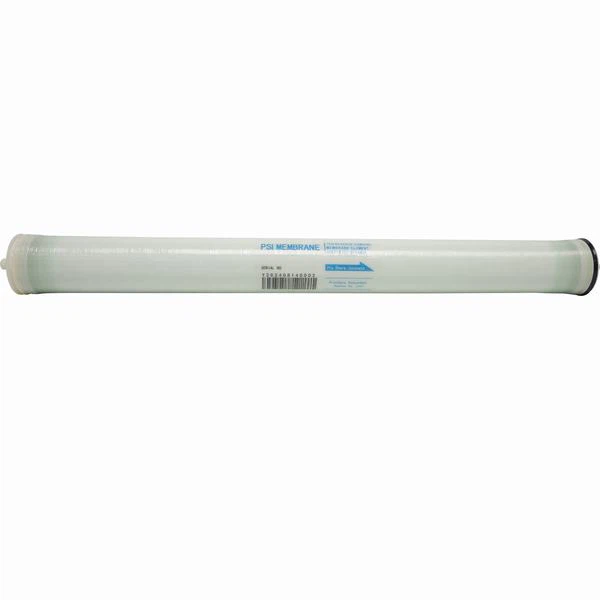
After pre - treatment, our water purifiers utilize advanced membrane technology. We offer a range of membrane products, such as the Multilayer Composite Membrane NF8040 And 4040, Nanofiltration Membrane Element 8040 And 4040, and NF 98 Nanofiltration Membrane Element.
Nanofiltration membranes are a key component in our water purification process for high - turbidity water. These membranes have pores that are small enough to block most of the remaining suspended particles, as well as some dissolved substances. The Multilayer Composite Membrane NF8040 And 4040 is designed with a unique multi - layer structure. The outer layer can initially capture larger particles, while the inner layers provide finer filtration. This helps to prevent the membrane from being clogged too quickly and ensures a long - term stable filtration performance.
The Nanofiltration Membrane Element 8040 And 4040 has a high rejection rate for particles and contaminants. It can effectively remove particles with a size of a few nanometers, which includes most of the remaining suspended solids in high - turbidity water. The membrane also has good chemical stability, which allows it to work in different water conditions without being damaged easily.
The NF 98 Nanofiltration Membrane Element is another excellent option for high - turbidity water treatment. It is designed to have a high flux, which means that a large amount of water can pass through the membrane in a short time. At the same time, it maintains a high rejection rate for contaminants, ensuring that the treated water meets the required quality standards.
Backwashing and Cleaning
To maintain the performance of our water purifiers when dealing with high - turbidity water, we incorporate backwashing and cleaning mechanisms. Backwashing is a process where the flow of water is reversed through the filter media or membrane. This helps to dislodge the trapped particles and flush them out of the system. For membrane filters, we also use chemical cleaning agents periodically. These agents can break down the organic and inorganic deposits on the membrane surface, restoring its filtration efficiency.

Monitoring and Control
In addition to the physical and chemical processes, our water purifiers are equipped with monitoring and control systems. These systems continuously measure the turbidity of the incoming and outgoing water, as well as other parameters such as pressure and flow rate. If the turbidity of the outgoing water exceeds the set standard, the system can automatically adjust the filtration process, such as increasing the frequency of backwashing or adjusting the chemical dosing.
Conclusion
Handling high - turbidity water is a complex but achievable task with our advanced water purification technology. Our pre - treatment processes, combined with state - of the - art membrane technology, backwashing, and monitoring systems, ensure that even the most turbid water can be effectively purified. Whether it's for domestic use, industrial applications, or community water supply, our water purifiers can provide a reliable solution.
If you are facing the problem of high - turbidity water and are interested in our water purification products, we welcome you to contact us for a detailed discussion. We can customize the water purification solutions according to your specific needs and water quality conditions. Let's work together to ensure access to clean and safe water.
References
- AWWA (American Water Works Association). Water Quality and Treatment: A Handbook of Community Water Supplies.
- Crittenden, John C., et al. Water Treatment: Principles and Design.
Send Inquiry