


How to measure the membrane element rejection rate accurately?
Sep 16, 2026
Leave a message
Accurately measuring the rejection rate of membrane elements is crucial for ensuring the efficient operation of water treatment systems, optimizing performance, and making informed decisions about membrane selection and maintenance. As a reputable membrane element supplier, we understand the significance of this parameter and are committed to providing reliable solutions. In this blog post, we'll explore the importance of measuring membrane element rejection rate and delve into the methods and best practices for achieving accurate results.
Understanding Membrane Element Rejection Rate
The rejection rate of a membrane element refers to its ability to prevent the passage of specific contaminants from the feed water to the permeate. It is typically expressed as a percentage, representing the proportion of a particular solute (such as salts, heavy metals, or organic compounds) that is retained by the membrane. For example, a rejection rate of 95% means that 95% of the targeted solute is rejected by the membrane, while only 5% passes through to the permeate.
A high rejection rate is desirable in most water treatment applications as it indicates the membrane's effectiveness in removing contaminants and producing high - quality water. However, achieving and maintaining a high rejection rate can be challenging due to factors such as membrane fouling, scaling, chemical degradation, and operating conditions.
Importance of Accurate Measurement
- Performance Evaluation: Measuring the rejection rate accurately allows us to evaluate the performance of membrane elements. By comparing the measured rejection rate with the manufacturer's specifications, operators can determine if the membrane is functioning as expected. Any significant deviation from the expected rejection rate may indicate membrane fouling, damage, or other issues that need to be addressed.
- Optimizing Operating Conditions: Accurate rejection rate measurement helps in optimizing the operating conditions of the water treatment system. For instance, by monitoring the rejection rate at different feed pressures, flow rates, and temperatures, operators can identify the optimal operating parameters that maximize rejection while minimizing energy consumption and membrane wear.
- Predicting Membrane Lifespan: Monitoring the rejection rate over time can provide insights into the health and lifespan of the membrane. A gradual decline in rejection rate may signal the onset of membrane fouling or degradation, allowing operators to plan for membrane replacement or cleaning in advance.
Methods for Measuring Membrane Element Rejection Rate
Direct Measurement
The most straightforward method for measuring the rejection rate is to analyze the concentrations of the solute in the feed water and the permeate. The rejection rate (R) can be calculated using the following formula:
$R = (\frac{C_{feed}-C_{permeate}}{C_{feed}})\times100%$
where $C_{feed}$ is the concentration of the solute in the feed water and $C_{permeate}$ is the concentration of the solute in the permeate.
To obtain accurate measurements, it is essential to use reliable analytical techniques. For inorganic solutes such as salts, methods like conductivity measurement, ion chromatography, or atomic absorption spectroscopy can be employed. For organic contaminants, techniques such as high - performance liquid chromatography (HPLC) or gas chromatography - mass spectrometry (GC - MS) may be more appropriate.
Indirect Measurement
In some cases, direct measurement of the solute concentration may be challenging or impractical. In such situations, indirect methods can be used. For example, conductivity measurement can be used as an indirect indicator of salt concentration. Since the conductivity of a solution is proportional to the concentration of ions present, changes in conductivity can be used to estimate the rejection rate of salts.
First, establish a calibration curve relating conductivity to the actual salt concentration. Then, measure the conductivity of the feed water and the permeate. Using the calibration curve, convert the conductivity values to salt concentrations and calculate the rejection rate using the formula mentioned above.
Best Practices for Accurate Measurement
- Proper Sampling: To ensure accurate measurements, proper sampling techniques are essential. Samples should be taken from representative locations in the feed water and permeate streams, avoiding areas prone to stagnation or turbulence. Samples should be collected in clean, pre - rinsed containers and analyzed immediately to prevent any changes in solute concentration due to chemical reactions or microbial growth.
- Regular Maintenance and Calibration of Analytical Equipment: Analytical equipment used for measuring solute concentrations must be regularly maintained and calibrated. This includes checking the accuracy of probes, replacing reagents, and verifying the performance of the equipment against certified standards. Regular calibration ensures that the measurements obtained are reliable and consistent.
- Control of Operating Conditions: During the measurement process, it is crucial to keep the operating conditions of the water treatment system stable. Fluctuations in feed pressure, flow rate, temperature, or pH can affect the rejection rate and lead to inaccurate measurements. Therefore, it is recommended to perform the measurements under steady - state conditions and record all relevant operating parameters for reference.
Our Membrane Element Offerings
As a leading membrane element supplier, we offer a wide range of products that are designed to meet the diverse needs of water treatment applications. Our membrane elements are known for their high rejection rates, durability, and reliability.
- Unique Membrane Element Resistant To Oxidation 8040: This membrane element is specifically designed to withstand oxidation, making it suitable for applications where the feed water contains oxidizing agents. It offers excellent rejection performance for a variety of contaminants while maintaining long - term stability.
- Commercial RO Membrane: Our commercial RO membranes are ideal for large - scale water treatment applications. They provide high rejection rates of salts, bacteria, and other contaminants, ensuring the production of high - quality water for commercial and industrial use.
- Pro - Therm Specialty High Temperature Resistant Membrane Element: This membrane element is engineered to operate at high temperatures, making it suitable for applications such as desalination of geothermal water or industrial wastewater treatment. It exhibits superior rejection performance even under extreme temperature conditions.
- Pro - LPHR Ultra - low Pressure High Salt Rejection RO Membrane Element: Our Pro - LPHR membrane element offers high salt rejection at ultra - low pressures, reducing energy consumption and operating costs. It is an excellent choice for applications where energy efficiency is a priority.
In addition to our membrane elements, we also offer Reclaimed Water Recycling Equipment that integrates our high - performance membranes to achieve efficient water recycling and reuse.
Conclusion
Accurately measuring the membrane element rejection rate is an essential aspect of water treatment system operation and management. By using the appropriate measurement methods and following best practices, operators can obtain reliable data that can be used to evaluate membrane performance, optimize operating conditions, and predict membrane lifespan.
As a trusted membrane element supplier, we are dedicated to providing our customers with high - quality products and comprehensive technical support. Our range of membrane elements is designed to offer excellent rejection rates and meet the challenging requirements of various water treatment applications.
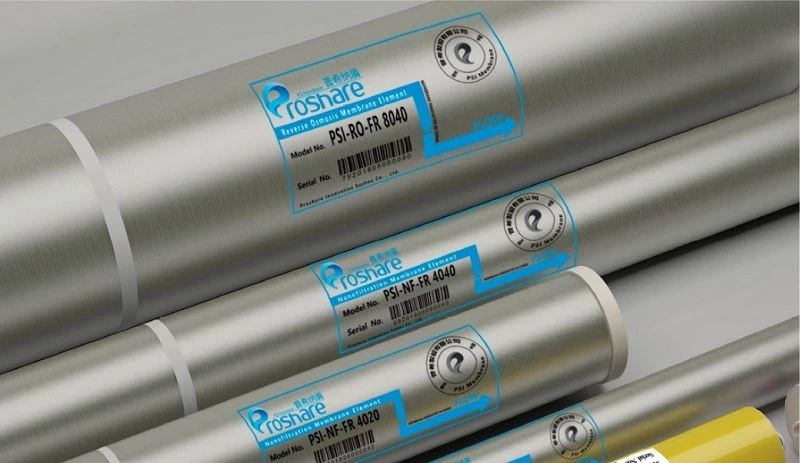

If you are in the market for membrane elements or water treatment equipment, we invite you to contact us for procurement discussions. We are committed to working with you to provide the best solutions for your water treatment needs.
References
- Cheryan, M. Ultrafiltration Handbook. Technomic Publishing Company, 1986.
- Baker, R. W. Membrane Technology and Applications. Wiley, 2004.
- Mulder, M. Basic Principles of Membrane Technology. Kluwer Academic Publishers, 1991.
Send Inquiry