


What is the impact of high - organic matter water on a commercial RO membrane?
Jan 07, 2026
Leave a message
As a supplier of commercial RO membranes, I've witnessed firsthand the challenges and opportunities presented by different water qualities, especially high-organic matter water. In this blog post, I'll delve into the impact of high-organic matter water on commercial RO membranes, drawing on my experiences and industry knowledge.
Understanding High-Organic Matter Water
High-organic matter water contains elevated levels of natural organic matter (NOM) such as humic and fulvic acids, as well as synthetic organic compounds. These substances originate from various sources, including decaying plant and animal matter, agricultural runoff, and industrial waste. The presence of organic matter can significantly affect the performance and lifespan of commercial RO membranes.
Impact on Membrane Performance
One of the primary concerns when dealing with high-organic matter water is membrane fouling. Organic substances can adhere to the membrane surface, forming a layer that restricts water flow and reduces permeate flux. This fouling layer acts as a barrier, increasing the resistance to water passage and requiring higher operating pressures to maintain the desired flow rate. Over time, the accumulation of organic matter can lead to a significant decline in membrane performance, resulting in reduced productivity and increased energy consumption.
In addition to fouling, high-organic matter water can also cause membrane scaling. Some organic compounds can react with dissolved minerals in the water, such as calcium and magnesium, to form insoluble precipitates. These precipitates can deposit on the membrane surface, further reducing its efficiency and potentially causing irreversible damage. Scaling not only affects the membrane's performance but also increases the frequency of cleaning and maintenance, adding to the overall operating costs.
Another impact of high-organic matter water is membrane degradation. Certain organic compounds, such as chlorine and chloramines, can react with the membrane material, causing it to break down and lose its integrity. This degradation can lead to increased salt passage, reduced rejection rates, and ultimately, a shorter membrane lifespan. To mitigate this risk, it's essential to pre-treat the water to remove or reduce the concentration of these harmful substances before it enters the RO system.
Challenges for Commercial RO Membrane Suppliers
As a supplier of commercial RO membranes, the presence of high-organic matter water poses several challenges. Firstly, it requires us to develop membranes that are more resistant to fouling, scaling, and degradation. This involves continuous research and development to improve the membrane's surface properties and chemical stability. We also need to provide our customers with comprehensive pre-treatment solutions to ensure that the water entering the RO system is of the highest quality.
Secondly, we need to educate our customers about the importance of proper water treatment and membrane maintenance. Many customers may not be aware of the potential impact of high-organic matter water on their RO systems, and may not take the necessary steps to prevent fouling and scaling. By providing them with training and support, we can help them optimize their system performance and extend the lifespan of their membranes.
Finally, we need to be able to offer customized solutions to meet the specific needs of our customers. Every application is unique, and the water quality can vary significantly from one location to another. By working closely with our customers, we can understand their requirements and recommend the most suitable membrane and pre-treatment system for their application.
Solutions and Strategies
To address the challenges posed by high-organic matter water, there are several solutions and strategies that can be employed. One of the most effective ways to prevent membrane fouling is to use pre-treatment processes such as coagulation, flocculation, and sedimentation. These processes help to remove large particles and organic matter from the water before it enters the RO system, reducing the load on the membrane and minimizing the risk of fouling.
Another important strategy is to use membrane cleaning and maintenance procedures on a regular basis. This involves using chemical cleaners to remove any fouling or scaling that has accumulated on the membrane surface. It's essential to use the right type of cleaner and follow the manufacturer's instructions carefully to avoid damaging the membrane.
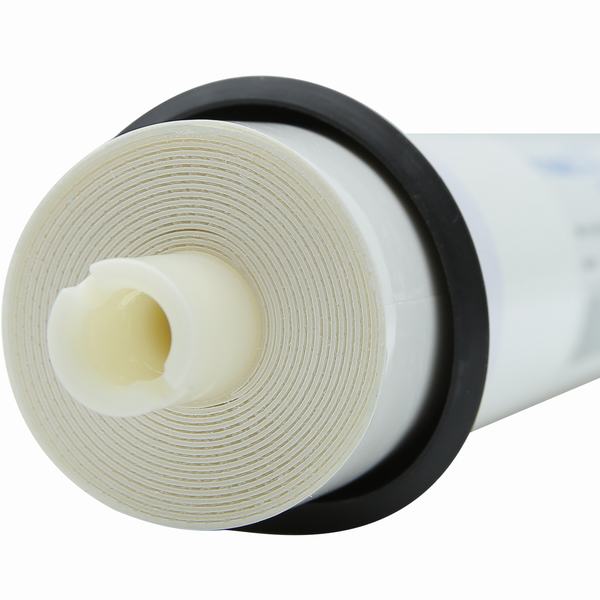

In addition to pre-treatment and cleaning, it's also important to select the right type of membrane for the application. There are several different types of commercial RO membranes available, each with its own unique properties and performance characteristics. By choosing a membrane that is specifically designed to handle high-organic matter water, you can improve the system's efficiency and reliability.
Our Products and Services
At our company, we offer a wide range of Commercial RO Membrane that are designed to meet the diverse needs of our customers. Our membranes are made from high-quality materials and are engineered to provide excellent performance and durability, even in challenging water conditions.
One of our popular products is the Commercial RO Membrane 3013. This membrane is designed for commercial applications and offers high flux rates and excellent salt rejection. It's also resistant to fouling and scaling, making it an ideal choice for treating high-organic matter water.
We also offer the Domestic Reverse Osmosis Membrane 2012, which is designed for residential applications. This membrane is compact and easy to install, and it provides high-quality drinking water with excellent taste and purity.
In addition to our membrane products, we also offer a range of pre-treatment and post-treatment solutions to help our customers optimize their RO systems. Our pre-treatment solutions include filtration, softening, and disinfection, while our post-treatment solutions include remineralization and pH adjustment.
Contact Us for Procurement and Consultation
If you're interested in learning more about our commercial RO membranes or need help selecting the right membrane for your application, please don't hesitate to contact us. Our team of experts is available to answer your questions and provide you with customized solutions tailored to your specific needs. Whether you're a small business owner or a large industrial facility, we have the products and expertise to help you achieve your water treatment goals.
References
- Amy, G. L., Her, N. H., & Drewes, J. E. (2009). A comparative assessment of advanced oxidation processes for water and wastewater treatment. Water Research, 43(14), 3521-3536.
- Freeman, B. D., & Pinnau, I. (2005). Polymer membranes for water purification: design, development, and application. Elsevier.
- Nghiem, L. D., Schäfer, A. I., & Elimelech, M. (2007). Organic matter fouling of reverse osmosis membranes: Fouling irreversibility and cleaning effects. Journal of Membrane Science, 302(1-2), 151-163.
- Tan, C. H., & Ng, H. Y. (2014). A review of chemical enhanced backwashing for fouling control in ultrafiltration membrane water treatment. Separation and Purification Technology, 126, 216-227.
Send Inquiry