


What is the impact of water turbidity on domestic reverse osmosis membrane elements?
Aug 12, 2025
Leave a message
As a supplier of domestic and commercial reverse osmosis membrane elements, I've witnessed firsthand the critical role water quality plays in the performance and longevity of these essential components. One of the most significant factors affecting reverse osmosis (RO) membranes is water turbidity. In this blog, we'll explore what water turbidity is, how it impacts domestic RO membrane elements, and what steps can be taken to mitigate these effects.
Understanding Water Turbidity
Water turbidity refers to the cloudiness or haziness of a fluid caused by large numbers of individual particles that are generally invisible to the naked eye, similar to smoke in air. These particles can include clay, silt, finely divided organic and inorganic matter, soluble colored organic compounds, algae, and other microorganisms. Turbidity is typically measured in nephelometric turbidity units (NTU) using a nephelometer, which measures the amount of light scattered by the particles in the water at a specific angle.
In domestic water supplies, turbidity can vary widely depending on the source of the water. Surface water sources, such as rivers, lakes, and reservoirs, tend to have higher turbidity levels than groundwater sources due to the presence of suspended solids from erosion, runoff, and biological activity. Water treatment processes, such as coagulation, flocculation, sedimentation, and filtration, are often used to reduce turbidity to acceptable levels for drinking water. However, even after treatment, some residual turbidity may remain, which can still have an impact on RO membrane performance.
Impact of Water Turbidity on Domestic Reverse Osmosis Membrane Elements
1. Fouling
One of the most significant impacts of high water turbidity on domestic RO membrane elements is fouling. Fouling occurs when suspended particles in the water accumulate on the surface of the membrane, forming a layer that restricts the flow of water through the membrane and reduces its efficiency. Over time, fouling can lead to a significant decrease in water production, an increase in operating pressure, and a decrease in the quality of the treated water.
The rate of fouling depends on several factors, including the turbidity of the feed water, the size and composition of the particles, the membrane material and surface properties, and the operating conditions of the RO system. In general, higher turbidity levels and larger particle sizes are more likely to cause fouling. Additionally, certain types of particles, such as colloids and organic matter, are more difficult to remove from the membrane surface and can cause more severe fouling than other types of particles.
2. Scaling
In addition to fouling, high water turbidity can also contribute to scaling on the surface of the RO membrane. Scaling occurs when dissolved minerals in the water, such as calcium carbonate, calcium sulfate, and silica, precipitate out of solution and form a hard, crystalline layer on the membrane surface. Scaling can reduce the permeability of the membrane, increase the operating pressure, and ultimately lead to membrane failure if left untreated.
Turbidity can contribute to scaling in several ways. First, suspended particles in the water can act as nucleation sites for the precipitation of dissolved minerals, increasing the likelihood of scaling. Second, high turbidity levels can reduce the effectiveness of antiscalants, which are chemicals used to prevent scaling by inhibiting the precipitation of dissolved minerals. Finally, fouling of the membrane surface can create areas of stagnant water where the concentration of dissolved minerals can increase, further promoting scaling.
3. Membrane Damage
High water turbidity can also cause physical damage to the RO membrane. Abrasive particles in the water, such as sand and gravel, can scratch the surface of the membrane, creating small holes and cracks that can allow contaminants to pass through the membrane and reduce its rejection efficiency. Additionally, the accumulation of large particles on the membrane surface can cause mechanical stress, leading to membrane deformation and failure.
4. Reduced Lifespan
The combined effects of fouling, scaling, and membrane damage can significantly reduce the lifespan of domestic RO membrane elements. As the membrane becomes fouled and scaled, its performance deteriorates, and it requires more frequent cleaning and maintenance to maintain its efficiency. Eventually, the membrane may become so damaged that it can no longer be effectively cleaned or repaired, and it must be replaced. This can result in increased operating costs and downtime for the RO system.
Mitigating the Impact of Water Turbidity on Domestic Reverse Osmosis Membrane Elements
1. Pretreatment
One of the most effective ways to mitigate the impact of water turbidity on domestic RO membrane elements is to implement a proper pretreatment system. Pretreatment involves the use of physical and chemical processes to remove suspended particles, dissolved minerals, and other contaminants from the feed water before it enters the RO system. Common pretreatment methods include sediment filtration, activated carbon filtration, and multimedia filtration.
Sediment filters are used to remove large particles, such as sand, silt, and rust, from the water. These filters typically consist of a porous medium, such as sand, gravel, or a synthetic filter media, that traps the particles as the water passes through. Activated carbon filters are used to remove organic compounds, chlorine, and other contaminants from the water. These filters contain activated carbon, which has a large surface area and can adsorb a wide range of contaminants. Multimedia filters are used to remove a combination of suspended particles and dissolved contaminants from the water. These filters typically consist of multiple layers of different filter media, such as sand, anthracite, and garnet, that provide different levels of filtration.
2. Monitoring and Maintenance
In addition to pretreatment, regular monitoring and maintenance of the RO system are essential to ensure its optimal performance and longevity. Monitoring involves the use of sensors and instruments to measure the turbidity, pressure, flow rate, and other parameters of the feed water and the RO system. By monitoring these parameters, it is possible to detect changes in the water quality and the performance of the RO system early and take appropriate action to prevent fouling, scaling, and membrane damage.
Maintenance involves the regular cleaning and replacement of the RO membrane elements, as well as the inspection and maintenance of the pretreatment system and other components of the RO system. Cleaning of the RO membrane elements can be performed using chemical cleaners or physical cleaning methods, such as backwashing and air scouring. The frequency of cleaning depends on the turbidity of the feed water, the operating conditions of the RO system, and the type of membrane material.
3. Selection of Appropriate Membrane Elements
When selecting domestic RO membrane elements, it is important to consider the turbidity of the feed water and the specific requirements of the RO system. Different types of membrane materials and surface properties have different levels of resistance to fouling and scaling. For example, some membrane materials are more hydrophilic, which means they have a greater affinity for water and are less likely to attract and retain suspended particles. Additionally, some membrane surfaces are smoother and more resistant to fouling than others.
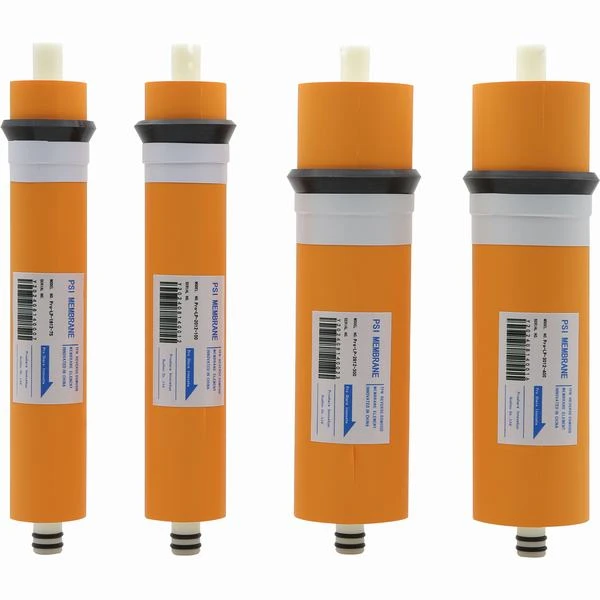

By selecting the appropriate membrane elements for the specific application, it is possible to minimize the impact of water turbidity on the performance and lifespan of the RO system. Domestic Reverse Osmosis Membrane elements are designed to provide high performance and reliability in a wide range of water quality conditions. They are available in a variety of sizes and configurations to meet the specific needs of different applications.
Conclusion
Water turbidity is a significant factor that can have a major impact on the performance and lifespan of domestic reverse osmosis membrane elements. High water turbidity can cause fouling, scaling, membrane damage, and reduced lifespan of the RO system. However, by implementing a proper pretreatment system, monitoring and maintaining the RO system regularly, and selecting the appropriate membrane elements, it is possible to mitigate the impact of water turbidity and ensure the optimal performance and longevity of the RO system.
If you are in the market for Best Domestic RO Membrane 3012 or other Domestic Reverse Osmosis Membrane elements, we invite you to contact us to discuss your specific requirements. Our team of experts can provide you with the information and support you need to select the right membrane elements for your application and ensure the optimal performance of your RO system.
References
- AWWA. (2017). Water Treatment Plant Design, 6th Edition.
- Crittenden, J. C., Trussell, R. R., Hand, D. W., Howe, K. J., & Tchobanoglous, G. (2012). MWH's Water Treatment: Principles and Design, 3rd Edition.
- Fane, A. G., & Fell, C. J. D. (1987). Membrane Separation Technology: Principles and Applications.
- Porter, M. C. (1990). Handbook of Industrial Membrane Technology.
Send Inquiry