


What is the rejection rate of domestic reverse osmosis membrane elements for salts?
Aug 29, 2026
Leave a message
What is the rejection rate of domestic reverse osmosis membrane elements for salts?
As a supplier of domestic and commercial reverse osmosis membrane elements, I often encounter inquiries about the salt rejection rate of our products. The salt rejection rate is a crucial parameter in evaluating the performance of reverse osmosis (RO) membranes. It indicates the membrane's ability to prevent salts and other impurities from passing through while allowing water to permeate, which is essential for producing high - quality purified water.
Understanding the Salt Rejection Rate
The salt rejection rate is defined as the percentage of dissolved salts in the feed water that are rejected by the RO membrane. It is calculated using the following formula:
[ \text{Salt Rejection}(%)=\left(1 - \frac{C_p}{C_f}\right)\times100% ]
Where (C_p) is the concentration of salts in the permeate (product water), and (C_f) is the concentration of salts in the feed water.
A higher salt rejection rate means that a greater proportion of salts are retained on the feed side of the membrane, resulting in cleaner and purer product water. For most domestic and commercial applications, a high - quality RO membrane is expected to have a salt rejection rate of at least 95%, and in some cases, it can reach up to 99% or even higher.

Factors Affecting the Salt Rejection Rate of Domestic RO Membrane Elements
Membrane Material and Structure
The choice of membrane material plays a vital role in determining the salt rejection rate. Most domestic RO membranes are made of thin - film composite (TFC) materials, which consist of a thin polyamide layer supported by a porous substrate. The polyamide layer has a dense molecular structure that can effectively block the passage of salts. The quality and uniformity of this layer can significantly impact the membrane's performance. A well - manufactured TFC membrane with a smooth and defect - free polyamide layer will generally have a higher salt rejection rate.
Operating Conditions
- Pressure: Increasing the operating pressure can enhance the water flux through the membrane and improve the salt rejection rate to a certain extent. However, if the pressure is too high, it may cause membrane compaction, which can reduce the membrane's lifespan and performance over time.
- Temperature: Temperature affects the viscosity and diffusion coefficient of water and salts. Generally, as the temperature increases, the water flux through the membrane increases, but the salt rejection rate may decrease slightly. This is because the increased thermal energy of the salt ions makes it easier for them to pass through the membrane pores.
- Feed Water Concentration: Higher feed water salinity can lead to a decrease in the salt rejection rate. As the concentration of salts in the feed water increases, the driving force for the reverse osmosis process (the pressure difference) needs to be adjusted accordingly. Otherwise, the increased osmotic pressure due to higher salt concentration can reduce the effective pressure for water permeation and allow more salts to pass through the membrane.
Membrane Age and Fouling
Over time, RO membranes can become fouled by various substances such as suspended solids, organic matter, and scale. Fouling can block the membrane pores and reduce the membrane's ability to reject salts. Regular maintenance and cleaning of the membranes are essential to maintain their performance. Most membranes have a limited lifespan, and as they age, their salt rejection rate may gradually decline even under optimal operating conditions.
Salt Rejection Rates of Our Domestic RO Membrane Elements
We offer a wide range of domestic and commercial RO membrane elements, each designed to meet different customer needs and operating requirements.
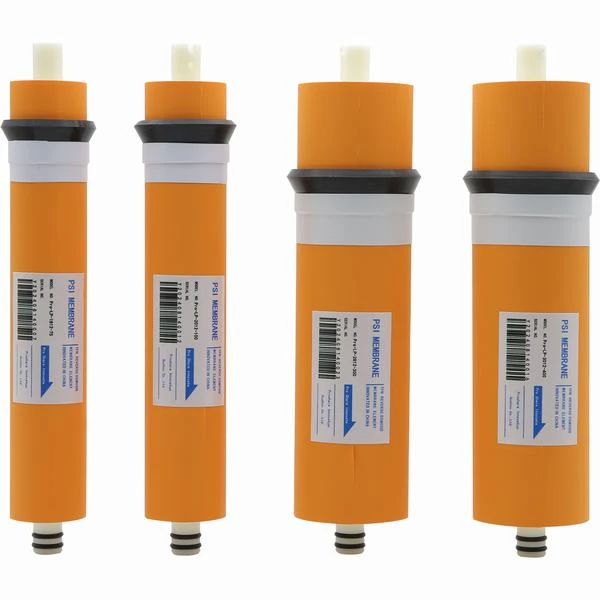
- Domestic RO Membrane Element 2812: This membrane element is designed for small - scale domestic water purification systems. It has a high - performance TFC membrane that typically provides a salt rejection rate of over 96% under standard operating conditions. You can find more detailed information about this product on our website: Domestic RO Membrane Element 2812.
- Domestic Reverse Osmosis Membrane 1812: Ideal for compact domestic water treatment units, the Domestic Reverse Osmosis Membrane 1812 offers reliable performance with a salt rejection rate often exceeding 95%. More details can be found here: Domestic Reverse Osmosis Membrane 1812.
- Commercial RO Membrane 3013: Designed for commercial applications such as small - to - medium - sized restaurants, offices, and laboratories, this membrane element can achieve a salt rejection rate of up to 99% under appropriate operating conditions. Check out its product page at Commercial RO Membrane 3013.
Importance of High Salt Rejection Rate in Different Applications
Domestic Use
In households, high - quality RO membranes with a high salt rejection rate are essential for producing great - tasting drinking water. They can effectively remove common contaminants such as chlorine, fluoride, lead, and other heavy metals, as well as dissolved salts that can cause water hardness. By reducing the salt content in the water, RO membranes help prevent scale buildup in pipes, appliances, and water heaters, extending their lifespan and improving their energy efficiency.
Commercial Use
In commercial settings, such as food and beverage industries, electronics manufacturing, and pharmaceutical production, the quality of water is critical. A high salt rejection rate ensures that the water used in the production process is free from impurities that could affect the quality of the final product. In the food and beverage industry, for example, pure water is necessary to ensure the taste, texture, and safety of products. In electronics manufacturing, water with a low salt content is required to prevent corrosion and damage to sensitive electronic components.
Our Commitment to Quality and Performance
We are committed to providing high - quality domestic and commercial reverse osmosis membrane elements. Our membranes are manufactured using state - of - the - art technology and strict quality control measures to ensure consistent performance and high salt rejection rates. We also offer comprehensive technical support and after - sales service to help our customers optimize the operation of their RO systems.
For more information about our Domestic Reverse Osmosis Membrane products and to learn more about our factory, you can visit Domestic Reverse Osmosis Membrane.
Contact Us for Procurement
If you are interested in purchasing our domestic or commercial reverse osmosis membrane elements, we encourage you to contact us for procurement negotiations. Our experienced sales team will work closely with you to understand your specific requirements and provide you with the most suitable products and solutions. Whether you need a single membrane element for a small - scale project or a large - scale supply for industrial applications, we are here to serve you.
References
- Cheryan, M. Ultrafiltration and Microfiltration Handbook. Technomic Publishing Co., Inc., 1998.
- Porter, M. C. Handbook of Industrial Membrane Technology. Noyes Publications, 1990.
- Mulder, M. Basic Principles of Membrane Technology. Kluwer Academic Publishers, 1996.
Send Inquiry