


What materials are used to make nf membrane element?
Dec 30, 2025
Leave a message
Nanofiltration (NF) membrane elements play a crucial role in various water treatment and separation processes. As a leading supplier of NF membrane elements, I am often asked about the materials used in their production. In this blog post, I will delve into the different materials that go into making NF membrane elements, their properties, and how they contribute to the overall performance of the membranes.
Polymers
The most common materials used in NF membrane elements are polymers. Polymers are large molecules made up of repeating subunits, and they offer a wide range of properties that make them suitable for membrane applications. Some of the polymers commonly used in NF membranes include:
Polyamide
Polyamide is one of the most widely used polymers in NF membrane production. It is a synthetic polymer that is known for its excellent chemical resistance, mechanical strength, and thermal stability. Polyamide membranes are typically made by interfacial polymerization, a process in which two monomers react at the interface between two immiscible solvents to form a thin, dense layer of polyamide on a porous support.
The polyamide layer is responsible for the separation properties of the NF membrane. It has a unique molecular structure that allows it to selectively reject certain solutes based on their size, charge, and chemical properties. For example, polyamide NF membranes can effectively reject divalent ions such as calcium and magnesium while allowing monovalent ions such as sodium and chloride to pass through. This makes them ideal for applications such as water softening and desalination.
Polyethersulfone (PES)
Polyethersulfone is another popular polymer used in NF membrane production. It is a high-performance thermoplastic polymer that offers excellent chemical resistance, mechanical strength, and thermal stability. PES membranes are typically made by phase inversion, a process in which a polymer solution is cast onto a support and then immersed in a non-solvent bath to induce phase separation and form a porous membrane structure.
PES membranes have a relatively open pore structure compared to polyamide membranes, which allows them to have higher fluxes and lower operating pressures. However, they also have lower rejection rates for small solutes compared to polyamide membranes. PES NF membranes are commonly used in applications such as wastewater treatment, food and beverage processing, and pharmaceutical purification.
Polysulfone (PS)
Polysulfone is a similar polymer to PES and is also widely used in NF membrane production. It has similar properties to PES, including excellent chemical resistance, mechanical strength, and thermal stability. PS membranes are typically made by the same phase inversion process as PES membranes.
Like PES membranes, PS NF membranes have a relatively open pore structure and offer high fluxes and low operating pressures. They are commonly used in applications such as water treatment, biotechnology, and electronics.
Porous Supports
In addition to the polymer layer, NF membrane elements also require a porous support to provide mechanical strength and stability. The porous support is typically made of a material such as polyester, polypropylene, or polysulfone, and it has a relatively open pore structure that allows water to pass through easily while providing support for the thin, dense polymer layer.
The properties of the porous support can have a significant impact on the performance of the NF membrane element. For example, the pore size and porosity of the support can affect the flux and rejection rates of the membrane. A support with a larger pore size and higher porosity will generally allow for higher fluxes but may also result in lower rejection rates.
Other Materials
In addition to polymers and porous supports, NF membrane elements may also contain other materials such as surfactants, additives, and coatings. These materials are used to improve the performance and durability of the membranes.
Surfactants
Surfactants are chemicals that can reduce the surface tension of a liquid and improve its wetting properties. In NF membrane production, surfactants are often added to the polymer solution or the non-solvent bath to improve the casting process and ensure a uniform distribution of the polymer on the support. Surfactants can also help to prevent fouling and improve the cleaning efficiency of the membranes.
Additives
Additives are chemicals that can be added to the polymer solution to modify its properties. For example, additives can be used to improve the mechanical strength, chemical resistance, or thermal stability of the polymer. Additives can also be used to enhance the separation properties of the membrane by modifying the surface charge or pore structure of the polymer layer.
Coatings
Coatings can be applied to the surface of the NF membrane to improve its performance and durability. For example, a hydrophilic coating can be applied to the membrane surface to improve its wetting properties and reduce fouling. A protective coating can also be applied to the membrane surface to prevent damage from chemicals, abrasion, or biological agents.
Our NF Membrane Elements
As a supplier of NF membrane elements, we offer a wide range of products that are made from high-quality materials and are designed to meet the specific needs of our customers. Our NF membrane elements are available in various configurations, including spiral wound, tubular, and hollow fiber, and they are suitable for a wide range of applications, including water treatment, food and beverage processing, pharmaceutical purification, and industrial separation.

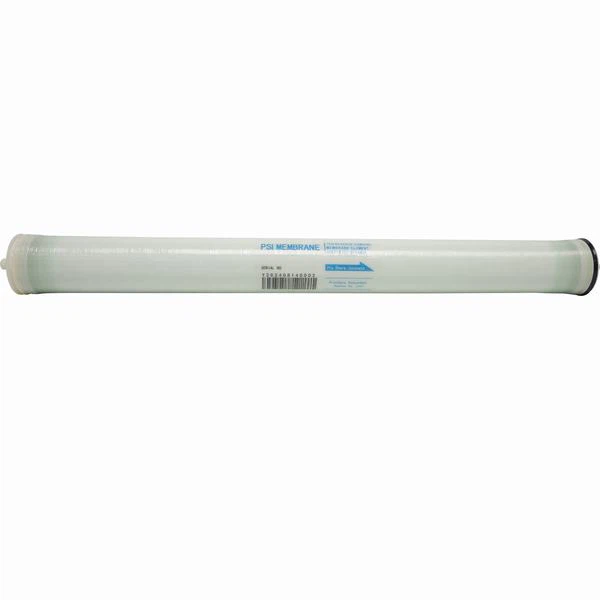
One of our popular products is the NF 98 Nanofiltration Membrane Element. This membrane element is made from a multilayer composite membrane that combines the excellent separation properties of polyamide with the high fluxes and low operating pressures of a porous support. The NF 98 membrane element is designed to provide high rejection rates for divalent ions and organic compounds while allowing for high fluxes and low operating pressures.
Another popular product is the NF Multilayer Composite Membrane 8040 And 4040. This membrane element is available in two standard sizes, 8040 and 4040, and it is made from a multilayer composite membrane that offers excellent separation properties and high fluxes. The NF Multilayer Composite Membrane 8040 And 4040 is suitable for a wide range of applications, including water treatment, food and beverage processing, and pharmaceutical purification.
We also offer the Multilayer Composite Membrane NF8040 And 4040, which is another high-performance NF membrane element that is made from a multilayer composite membrane. This membrane element offers excellent separation properties, high fluxes, and low operating pressures, and it is suitable for a wide range of applications, including water treatment, industrial separation, and environmental protection.
Contact Us for Purchasing
If you are interested in purchasing NF membrane elements for your specific application, please do not hesitate to contact us. Our team of experts can provide you with detailed information about our products, help you select the right membrane element for your needs, and assist you with any technical questions or concerns you may have. We are committed to providing our customers with high-quality products, excellent customer service, and competitive prices.
References
- Mulder, M. (1996). Basic Principles of Membrane Technology. Kluwer Academic Publishers.
- Baker, R. W. (2004). Membrane Technology and Applications. John Wiley & Sons.
- Strathmann, H. (2010). Synthetic Membranes: Science, Engineering and Applications. Elsevier.
Send Inquiry