


How does the long - term operation affect nf membrane element performance?
Aug 29, 2025
Leave a message
How does the long - term operation affect nf membrane element performance?
As a supplier of NF membrane elements, I've witnessed firsthand the significant impact that long - term operation can have on the performance of these essential filtration components. Nanofiltration (NF) membrane elements are widely used in various industries, including water treatment, food and beverage processing, and pharmaceutical manufacturing, due to their ability to selectively separate different molecules based on size and charge. However, over time, continuous use can lead to several changes in their performance.
1. Fouling and Scaling
One of the most common issues during long - term operation is fouling and scaling. Fouling occurs when particles, colloids, organic matter, or microorganisms accumulate on the membrane surface or within the membrane pores. This buildup creates a physical barrier that restricts the flow of water through the membrane, reducing the permeate flux. For example, in a water treatment plant that uses NF membrane elements to remove contaminants from surface water, algae and suspended solids can gradually coat the membrane surface.

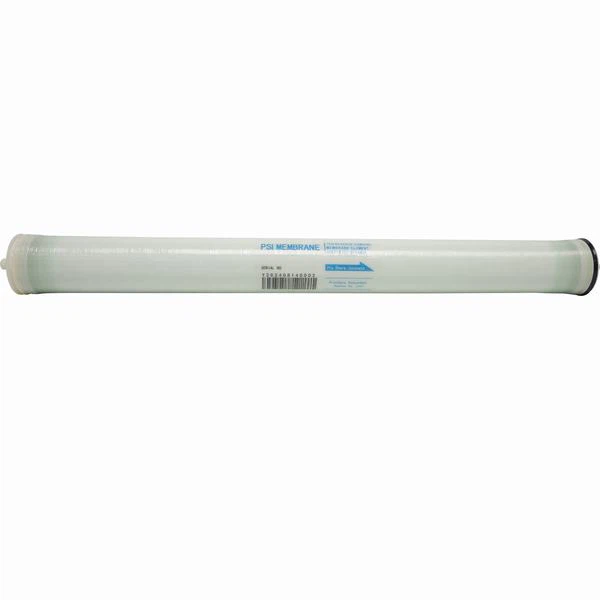
Scaling, on the other hand, is caused by the precipitation of sparingly soluble salts, such as calcium carbonate, calcium sulfate, and silica, on the membrane surface. As the feed water is concentrated during the filtration process, the solubility of these salts decreases, leading to their deposition on the membrane. This not only reduces the permeate flux but also increases the salt passage, as the scale layer can disrupt the selective separation mechanism of the membrane.
To mitigate fouling and scaling, regular cleaning and maintenance procedures are essential. Chemical cleaning agents can be used to remove the fouling and scaling layers, but improper cleaning can also damage the membrane. For instance, using a cleaning agent with a pH that is too high or too low can degrade the membrane material. Therefore, it is crucial to follow the manufacturer's recommendations for cleaning and maintenance.
2. Compaction
Long - term operation under high pressure can cause compaction of the NF membrane element. Compaction refers to the irreversible deformation of the membrane structure due to the applied pressure. As the membrane is compressed, the pore size decreases, which initially may lead to an increase in the rejection rate of solutes. However, over time, the reduced pore size also restricts the flow of water, resulting in a decrease in permeate flux.
The degree of compaction depends on several factors, including the membrane material, the operating pressure, and the duration of operation. For example, some membrane materials are more resistant to compaction than others. Polyamide - based NF membranes, which are widely used in the industry, can experience significant compaction if operated at high pressures for extended periods. To minimize compaction, it is important to operate the membrane system within the recommended pressure range.
3. Chemical Degradation
The chemical environment of the feed water can also have a profound impact on the performance of NF membrane elements during long - term operation. Exposure to oxidizing agents, such as chlorine and ozone, can cause chemical degradation of the membrane material. Chlorine, in particular, is a common disinfectant used in water treatment, but it can react with the polyamide layer of the membrane, breaking the chemical bonds and reducing the membrane's integrity.
Other chemicals, such as acids and bases, can also affect the membrane performance. Extreme pH values can cause hydrolysis of the membrane material, leading to a decrease in rejection rate and an increase in permeate flux. For example, in a chemical manufacturing plant where NF membrane elements are used to separate different chemical components, the presence of strong acids or bases in the feed stream can accelerate the chemical degradation of the membrane.
To protect the membrane from chemical degradation, pre - treatment processes can be used to remove or reduce the concentration of harmful chemicals in the feed water. For example, activated carbon filters can be used to remove chlorine from the feed water before it enters the membrane system.
4. Biological Growth
Biological growth on the membrane surface is another issue that can occur during long - term operation, especially in systems that treat water containing organic matter and nutrients. Bacteria, fungi, and other microorganisms can form a biofilm on the membrane surface, which not only reduces the permeate flux but also increases the risk of microbial contamination of the permeate.
The formation of a biofilm is a complex process that involves the attachment of microorganisms to the membrane surface, followed by their growth and the production of extracellular polymeric substances (EPS). The EPS matrix can trap other particles and solutes, further exacerbating the fouling problem. To control biological growth, biocides can be added to the feed water, but this approach also has its limitations, as some biocides can be toxic to the environment and may also damage the membrane.
5. Impact on Product Quality
The changes in the performance of NF membrane elements during long - term operation can have a direct impact on the quality of the final product. A decrease in permeate flux means that less water is being filtered, which can lead to a decrease in the production capacity of the system. An increase in salt passage or a decrease in the rejection rate of other solutes can result in a lower - quality product.
For example, in a food and beverage processing plant, where NF membrane elements are used to concentrate fruit juices or remove impurities from dairy products, a decrease in the rejection rate of sugars or proteins can affect the taste and nutritional value of the final product. In a pharmaceutical manufacturing plant, any contamination of the product due to membrane fouling or degradation can have serious consequences for patient safety.
6. Our Solutions
At our company, we offer a range of high - quality NF membrane elements, such as the NF98 Series Multilayer Composite Membrane, Multilayer Composite Membrane NF8040 And 4040, and NF Multilayer Composite Membrane 8040 And 4040. These membranes are designed to resist fouling, scaling, compaction, and chemical degradation, ensuring reliable performance over the long term.
We also provide comprehensive technical support to our customers. Our team of experts can help you design the optimal membrane system for your specific application, recommend the appropriate pre - treatment processes, and develop a customized cleaning and maintenance schedule. By working closely with our customers, we can ensure that their NF membrane systems operate at peak performance and deliver high - quality products.
If you are interested in learning more about our NF membrane elements or need assistance with your membrane system, we invite you to contact us for a detailed discussion. Our team is ready to provide you with the best solutions for your filtration needs.
References
- Cheryan, M. Ultrafiltration and Microfiltration Handbook. Technomic Publishing Company, 1998.
- Baker, R. W. Membrane Technology and Applications. John Wiley & Sons, 2004.
- Schwinge, J. - F., et al. "Nanofiltration membranes review: Recent advances and future prospects." Journal of Membrane Science, 2005, 263(1 - 2): 1 - 29.
Send Inquiry