


How does the presence of contaminants affect a customized RO membrane?
Jul 03, 2026
Leave a message
As a supplier of customized RO membranes, I've witnessed firsthand the critical role these membranes play in various water treatment applications. Reverse osmosis (RO) technology is a cornerstone in purifying water, removing a wide range of contaminants to meet the specific needs of different industries. However, the presence of contaminants can significantly impact the performance and lifespan of a customized RO membrane. In this blog, I'll delve into how contaminants affect these membranes and what measures can be taken to mitigate these effects.
Types of Contaminants and Their Impact
Inorganic Contaminants
Inorganic contaminants such as calcium, magnesium, iron, and silica are commonly found in water sources. These contaminants can cause scaling on the surface of the RO membrane. Scaling occurs when the solubility of these minerals is exceeded, and they precipitate out of the water, forming a hard, crystalline layer on the membrane surface. This layer acts as a physical barrier, reducing the membrane's permeability and increasing the pressure required to force water through. As a result, the membrane's flux (the rate of water flow through the membrane) decreases, and the energy consumption of the RO system increases.
For example, calcium carbonate scaling is a common problem in water with high hardness. When the pH of the water is elevated, calcium carbonate becomes less soluble and can form scale on the membrane. This not only reduces the membrane's efficiency but can also cause irreversible damage if left untreated. To address this issue, customized RO membranes can be designed with anti - scaling properties or combined with pre - treatment processes such as water softening to reduce the concentration of scaling ions in the feed water.
Organic Contaminants
Organic contaminants include natural organic matter (NOM), such as humic and fulvic acids, as well as synthetic organic compounds like pesticides and pharmaceuticals. These contaminants can foul the RO membrane by adsorbing onto its surface or getting trapped within the membrane pores. Organic fouling can lead to a decrease in membrane flux, an increase in salt passage (reducing the membrane's rejection rate), and an overall decline in water quality.
NOM, in particular, can form a gel - like layer on the membrane surface, which restricts water flow and provides a favorable environment for the growth of microorganisms. To combat organic fouling, customized RO membranes can be engineered with hydrophilic surfaces to reduce the adsorption of organic molecules. Additionally, pre - treatment steps such as activated carbon filtration can be used to remove a significant portion of organic contaminants before they reach the RO membrane.
Microbial Contaminants
Microorganisms such as bacteria, viruses, and fungi can cause biofouling of the RO membrane. Biofouling occurs when microorganisms attach to the membrane surface and form a biofilm. This biofilm can block the membrane pores, increase the hydraulic resistance, and reduce the membrane's performance. Moreover, the presence of microorganisms can lead to the production of extracellular polymeric substances (EPS), which further contribute to fouling and can cause corrosion of the membrane materials.
To prevent biofouling, customized RO membranes can be treated with antimicrobial agents or designed with a smooth surface to discourage microbial attachment. Regular cleaning and disinfection of the RO system are also essential to control microbial growth. In some cases, pre - treatment with ultraviolet (UV) light or chlorine can be used to reduce the microbial load in the feed water.
The Importance of Customization in Contaminant Resistance
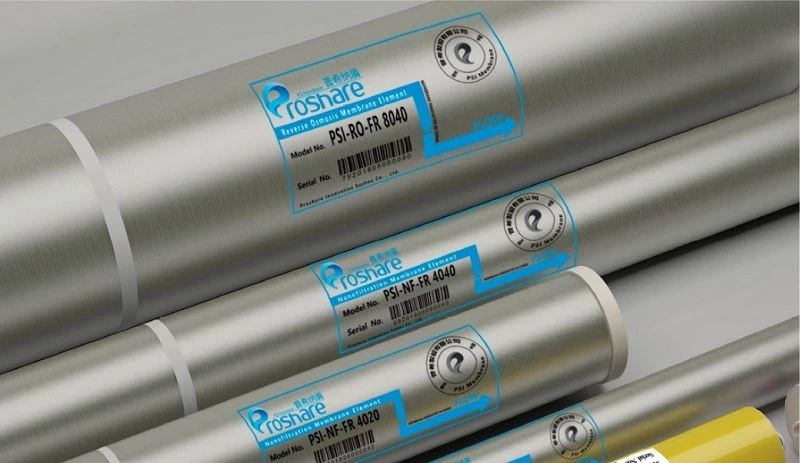
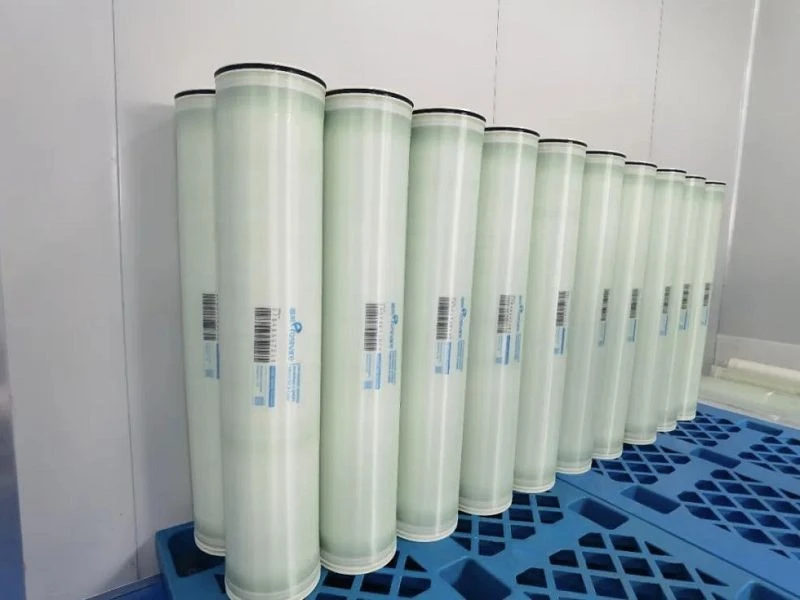
Customized RO membranes offer several advantages in dealing with contaminants. By understanding the specific composition of the feed water and the requirements of the application, we can design membranes with tailored properties. For instance, if the feed water contains high levels of high - temperature contaminants, we can offer the Pro - Therm Specialty High Temperature Resistant Membrane Element. This membrane is specifically engineered to withstand high temperatures without sacrificing its performance, making it suitable for applications in industries such as food and beverage processing, where hot water is often used.
Similarly, if the water has a high concentration of acidic contaminants, the PSI - AS Ammonium Sulfate Acid - Resistant Membrane Element can be a great choice. This membrane is designed to resist the corrosive effects of acids, ensuring long - term stability and performance in acidic environments.
For applications where the water contains oxidizing agents, the Pro - CR Specialty Oxidation Resistant Membrane Element is an excellent option. It can withstand the oxidative stress caused by contaminants such as chlorine and ozone, maintaining its integrity and performance over time.
Mitigation Strategies
Pre - treatment
Pre - treatment is a crucial step in protecting the RO membrane from contaminants. By removing or reducing the concentration of contaminants before they reach the membrane, we can extend the membrane's lifespan and improve its performance. Pre - treatment methods can include filtration, sedimentation, ion exchange, and chemical treatment.
Filtration is one of the most common pre - treatment methods. It can remove suspended solids, large particles, and some microorganisms from the feed water. Sedimentation can be used to settle out heavy particles, while ion exchange can be employed to remove specific ions such as calcium and magnesium. Chemical treatment, such as pH adjustment and the addition of anti - scaling agents, can also be used to prevent scaling and fouling.
Membrane Cleaning
Regular membrane cleaning is essential to remove accumulated contaminants and restore the membrane's performance. There are two main types of cleaning: physical cleaning and chemical cleaning. Physical cleaning methods include backwashing, which involves reversing the flow of water through the membrane to dislodge loose contaminants. Chemical cleaning, on the other hand, uses specific chemicals to dissolve and remove stubborn contaminants such as scale and organic fouling.
The choice of cleaning method and chemicals depends on the type of contaminants and the membrane material. It's important to follow the manufacturer's recommendations to avoid damaging the membrane during the cleaning process.
Monitoring and Control
Continuous monitoring of the RO system is necessary to detect any changes in membrane performance and water quality. Parameters such as flux, pressure, salt rejection, and conductivity can be monitored to identify potential problems early. By analyzing these data, we can adjust the operating conditions of the RO system, such as the feed water flow rate and pressure, to optimize its performance.
In addition, real - time monitoring of the feed water quality can help us detect any sudden changes in contaminant levels. This allows us to take immediate action, such as adjusting the pre - treatment process or increasing the frequency of membrane cleaning.
Conclusion
The presence of contaminants can have a significant impact on the performance and lifespan of a customized RO membrane. However, by understanding the types of contaminants and their effects, and by implementing appropriate mitigation strategies, we can ensure that the RO membrane operates efficiently and effectively. As a supplier of customized RO membranes, we are committed to providing high - quality products that are tailored to the specific needs of our customers. Whether you are dealing with high - temperature, acidic, or oxidative contaminants, we have the right membrane solution for you.
If you are interested in learning more about our customized RO membranes or have specific water treatment requirements, we encourage you to contact us for a detailed discussion. Our team of experts is ready to assist you in selecting the most suitable membrane and developing a comprehensive water treatment solution.
References
- Cheryan, M. (1998). Ultrafiltration and Microfiltration Handbook. Technomic Publishing.
- Baker, R. W. (2004). Membrane Technology and Applications. John Wiley & Sons.
- Mulder, M. (1996). Basic Principles of Membrane Technology. Kluwer Academic Publishers.
Send Inquiry