


How does water salinity affect commercial reverse osmosis membrane elements?
May 22, 2026
Leave a message
Hey there! I'm an expert in the field of domestic and commercial reverse osmosis membrane elements. Today, I want to talk about how water salinity affects these membrane elements. As a supplier of these products, I've seen firsthand the impact that different levels of water salinity can have on the performance and lifespan of reverse osmosis membranes.
First off, let's understand what reverse osmosis is. Reverse osmosis is a process that uses a semi - permeable membrane to remove impurities from water. Water is forced through the membrane under pressure, leaving behind contaminants such as salts, minerals, and other dissolved solids. The membrane acts as a barrier, allowing only pure water molecules to pass through.
Now, water salinity refers to the amount of dissolved salts in the water. It's usually measured in parts per thousand (ppt) or parts per million (ppm). The higher the salinity, the more salts are present in the water. And this has a significant impact on reverse osmosis membrane elements.
How Salinity Affects the Performance of Reverse Osmosis Membranes
1. Osmotic Pressure
One of the most important things affected by water salinity is osmotic pressure. Osmotic pressure is the force that drives water through the membrane. As the salinity of the water increases, the osmotic pressure also increases. This means that more pressure is required to force the water through the membrane. For commercial reverse osmosis systems, this can lead to higher energy costs because more power is needed to generate the required pressure.
Let's say you're using a Residential RO Membrane 3012 in a household. If the water has a relatively low salinity, the membrane can operate efficiently with a lower pressure. But if the water salinity goes up, the system will have to work harder to push the water through the membrane, which can lead to increased wear and tear on the pump and other components.
2. Membrane Fouling
High - salinity water often contains a lot of dissolved salts and other impurities. These can accumulate on the surface of the membrane, causing fouling. Fouling reduces the membrane's ability to allow water to pass through, which in turn decreases the system's productivity. The salts can form a hard scale on the membrane surface, which is difficult to remove. This not only reduces the flow rate of the water but also can damage the membrane over time.
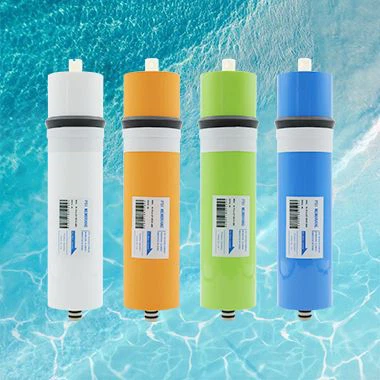

For example, in a commercial setting where large volumes of water are being treated, a Domestic RO Membrane Element 2812 might be used. If the water has high salinity, the membrane can quickly become fouled. This requires more frequent cleaning and maintenance, which can be costly and time - consuming.
3. Membrane Degradation
Over time, high - salinity water can cause the membrane to degrade. The salts and other chemicals in the water can react with the membrane material, breaking down its structure. This can lead to a decrease in the membrane's rejection rate, meaning that more impurities are able to pass through the membrane. As a result, the quality of the treated water deteriorates.
Strategies to Deal with High - Salinity Water
1. Pretreatment
One of the best ways to deal with high - salinity water is through pretreatment. This involves removing some of the salts and other impurities before the water reaches the reverse osmosis membrane. Pretreatment methods can include sediment filtration, activated carbon filtration, and ion exchange. By reducing the amount of salts and other contaminants in the water, the load on the reverse osmosis membrane is reduced, which can extend its lifespan and improve its performance.
2. Using High - Performance Membranes
There are membranes specifically designed to handle high - salinity water. These membranes are made from materials that are more resistant to fouling and degradation. For example, some membranes have a more robust structure that can withstand the harsh conditions of high - salinity water. As a supplier, we offer a range of Domestic Reverse Osmosis Membrane options that are suitable for different levels of water salinity.
3. Regular Maintenance
Regular maintenance is crucial when dealing with high - salinity water. This includes cleaning the membrane, checking the pressure and flow rates, and replacing any worn - out components. By keeping the system in good condition, you can ensure that it continues to operate efficiently and effectively.
Impact on Commercial Applications
In commercial applications, the impact of water salinity on reverse osmosis membranes can be significant. For industries such as food and beverage, pharmaceuticals, and power generation, high - quality water is essential. If the reverse osmosis membranes are not performing well due to high salinity, it can affect the quality of the final product.
For example, in a food processing plant, if the water used in the production process contains too many impurities due to poor membrane performance, it can affect the taste, safety, and shelf - life of the food products. In a power generation plant, high - salinity water can cause scaling in the boilers and other equipment, which can reduce efficiency and increase maintenance costs.
Conclusion
In conclusion, water salinity has a major impact on commercial reverse osmosis membrane elements. It affects the performance, lifespan, and cost of operating the reverse osmosis system. As a supplier of domestic and commercial reverse osmosis membrane elements, we understand the challenges that high - salinity water can pose. That's why we offer a wide range of membranes and solutions to help our customers deal with these issues.
If you're in the market for reverse osmosis membrane elements and need to deal with high - salinity water, we're here to help. We can provide you with the right membranes and advice on how to maintain and operate your system effectively. Don't hesitate to reach out for more information and to start a procurement discussion. We're committed to helping you get the best results from your reverse osmosis system.
References
- Cheryan, M. (1998). Ultrafiltration and Microfiltration Handbook. Technomic Publishing.
- Baker, R. W. (2004). Membrane Technology and Applications. Wiley.
Send Inquiry