


What are the methods of water softening in water purification?
Sep 02, 2025
Leave a message
Water hardness is a common issue that many of us face, especially when it comes to our daily water usage. As a water purification supplier, I've seen firsthand the impact that hard water can have on both domestic and commercial settings. In this blog, I'm going to break down the different methods of water softening in water purification.
What is Hard Water?
Before we dive into the softening methods, let's quickly understand what hard water is. Hard water contains high levels of dissolved minerals, mainly calcium and magnesium. These minerals can come from the groundwater sources, where water picks up these substances as it passes through rocks and soil. You can often tell if you have hard water by the tell - tale signs like soap scum in your sinks and bathtubs, limescale buildup on your appliances, and even dull - looking hair and skin after using the water.
Ion Exchange Resins
One of the most popular methods for water softening is the use of ion exchange resins. This technology has been around for a long time and is widely used in both homes and commercial buildings.
In an ion exchange system, the hard water passes through a tank filled with resin beads. These beads are negatively charged and are initially loaded with sodium ions. As the calcium and magnesium ions (which are positively charged) in the hard water come into contact with the resin beads, an exchange occurs. The calcium and magnesium ions stick to the resin beads, while the sodium ions are released into the water.
Over time, the resin beads become saturated with calcium and magnesium ions. At this point, the system needs to be regenerated. This is usually done by flushing a concentrated salt solution (brine) through the resin tank. The high concentration of sodium ions in the brine causes the calcium and magnesium ions to be displaced from the resin beads, and the resin is once again loaded with sodium ions, ready to continue the softening process.
Ion exchange systems are great because they are very effective at removing calcium and magnesium ions, providing soft water for all your needs. However, they do require regular maintenance, like refilling the salt for regeneration, and they add a small amount of sodium to the water. If you're on a low - sodium diet, this might be something to consider.
Reverse Osmosis
Reverse osmosis (RO) is another powerful method for water softening. It's not only used for softening but also for removing a wide range of contaminants from water.
In a reverse osmosis system, water is forced through a semi - permeable membrane under pressure. The membrane has tiny pores that are so small that only water molecules can pass through, while larger molecules like calcium, magnesium, and other contaminants are left behind.
There are two main types of RO membranes relevant to our discussion: Domestic Reverse Osmosis Membrane for home use and Commercial RO Membrane. The domestic ones are designed to handle the water usage of a typical household, while the commercial ones are built to handle larger volumes of water, suitable for businesses, factories, and institutions.
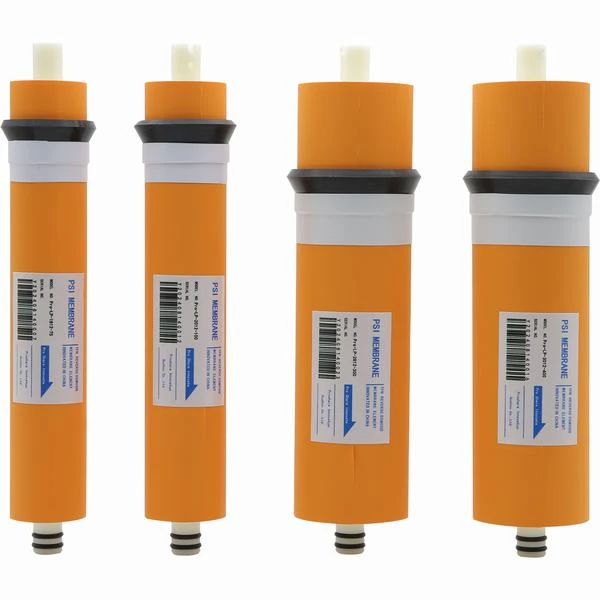

The great thing about reverse osmosis is that it not only softens the water but also removes other impurities like heavy metals, bacteria, and viruses. However, it does waste some water during the process, and the membranes need to be replaced periodically.
Lime Softening
Lime softening is a chemical precipitation method that has been used in large - scale water treatment plants for a long time.
In this process, lime (calcium hydroxide) is added to the hard water. The lime reacts with the carbon dioxide in the water to form calcium carbonate, which precipitates out of the solution. It also reacts with the calcium and magnesium bicarbonates in the water to form insoluble calcium carbonate and magnesium hydroxide, which can be removed by sedimentation and filtration.
Lime softening is effective at reducing the hardness of the water, especially in water with high carbonate hardness. It can also remove some other impurities like iron and manganese. But it requires a lot of equipment and careful control of the chemical dosing. It's mainly used in large - scale applications rather than in individual homes.
Chelation
Chelation is a less well - known method for water softening. In chelation, a chelating agent is added to the water. This agent forms a chemical bond with the calcium and magnesium ions, preventing them from forming scale.
One common chelating agent is ethylenediaminetetraacetic acid (EDTA). The chelating agent wraps around the calcium and magnesium ions, making them soluble and unable to cause limescale buildup.
Chelation is often used in industrial applications where the water needs to be softened without the use of large - scale equipment. It's also sometimes used in combination with other water treatment methods. However, the chelating agents can be expensive, and there are some environmental concerns about their disposal.
Magnetic and Electronic Water Conditioners
There are also magnetic and electronic water conditioners on the market. These devices claim to change the structure of the calcium and magnesium ions in the water, preventing them from forming scale.
Magnetic water conditioners use magnets to create a magnetic field through which the water passes. Electronic water conditioners use electrical impulses to achieve a similar effect.
The effectiveness of these devices is a bit controversial. Some users claim that they see a reduction in limescale buildup, while others are skeptical. There isn't a lot of scientific evidence to fully support their claims, but they are relatively easy to install and don't require a lot of maintenance.
Conclusion
As a water purification supplier, I know that choosing the right water softening method depends on a few factors. For a typical home, an ion exchange system or a Domestic Reverse Osmosis Membrane system might be the best choice. They can provide reliable soft water for all your daily needs.
For commercial applications, the requirements are often more complex. You might need a combination of different methods, like using ion exchange for basic softening and reverse osmosis for further purification.
If you're struggling with hard water and are looking for a solution, don't hesitate to reach out. We can help you figure out which water softening method is best for your specific situation. Whether it's for your home, your business, or an industrial facility, we have the expertise and the products to meet your needs. Contact us to start a discussion about your water purification requirements, and let's work together to get you the soft, clean water you deserve.
References
- AWWA (American Water Works Association). Water Quality and Treatment: A Handbook of Community Water Supplies.
- Wilcox, R. (2007). Water Treatment Operator Training Handbook.
- White, G. C. (2010). Handbook of Chlorination and Alternative Disinfectants.
Send Inquiry